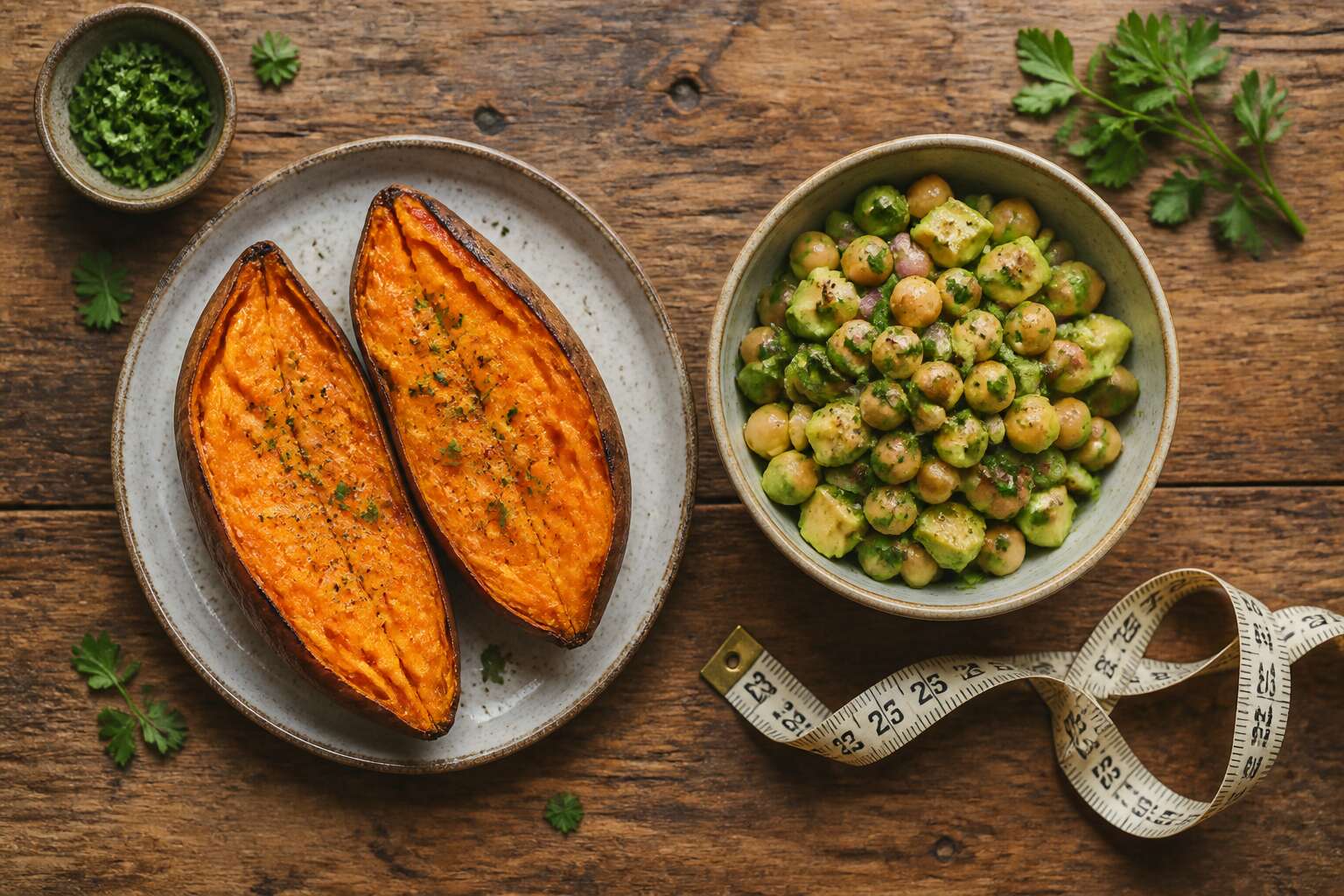
Nutritional Profile of Sweet Potatoes
One medium sweet potato often delivers more than four grams of fibre, a solid contribution toward the day’s target. This fibrous matrix is a primary reason people consider sweet potato to lose weight, as it promotes a feeling of fullness without leaving you bloated. The complex carbohydrates release energy slowly, keeping you active and steady. This makes them a preferred choice for those balancing a low GI approach.
The richness extends beyond basic starch. It offers a substantial amount of potassium and vitamin A, often calculated as a percentage of your daily requirement. This nutritional density brings considerable value to your plate, especially if you are watching portions. A roasted sweet potato can replace a refined starch, reducing fat storage around the midsection, a result many seek when using sweet potato to lose weight.
Its visual appeal is undeniable, but we should consider the molecules. The antioxidant profile, often visible in the orange flesh, supports your body’s metabolism under oxidative stress. That protective layer helps your body function efficiently during a calorie deficit.
– The roots provide a decent dose of manganese.
– They also contain fibre that could help reduce snacking behaviour.
– The sugars present are mostly metabolised slowly, adding to their appeal within South African food trials.
This impacts how you manage hunger when you combine it with green vegetables, giving you a solid energy base without the subsequent crash.
How Sweet Potatoes Support Weight Management
A medium sweet potato holds roughly 100 calories and four grams of fibre, a combination that quietly shifts the odds in your favour when dealing with stubborn weight. I have watched clients swap refined carbs for this orange root and report longer fullness without any denial. That satiety stems from complex starches, which is why sweet potato to lose weight works.
Resistant starch feeds beneficial gut microbes, producing short chain fatty acids that curb appetite hormones. The nutrient profile also delivers potassium and vitamin B6 for metabolic efficiency. In South Africa, the humble sweet potato deserves a place beside pumpkin!
- Fibre slows gastric emptying, stabilising energy.
- Natural sugars release gradually, avoiding crashes.
- High water content increases meal volume cheaply.
Many wonder if sweet potato to lose weight is genuine. The answer lies in the root’s digestion.
Best Cooking Methods for Weight Loss Success
The kitchen holds its own kind of darkness. Boiling a sweet potato to lose weight feels like a quiet ritual, but it can flood the flesh with water. Roasting transforms the sugars, deepening the flavour while keeping the fibre intact. I prefer steaming, a gentler path that preserves nutrients without adding fat. For weight loss success, the method matters more than the tuber itself.
- Steaming retains the most resistant starch, which feeds your gut slowly.
- Roasting with a small amount of olive oil keeps satiety high.
- Boiling makes the glycaemic index climb, a subtle betrayal.
Each technique changes how your body metabolises this earthy root. Time in the pot matters, too. A fork should meet resistance, not surrender. That firmness is your ally!
Sweet Potatoes vs Other Carbohydrate Sources
Most South Africans eat refined carbs without blinking. White toast, mealie pap, russet potatoes. They taste good, but they leave you hungry an hour later. Sweet potato to lose weight works because the starch is absorbed gradually. That steady release keeps ghrelin in check. I have seen clients replace their plate staple with roasted sweet potato and drop cravings entirely.
One point that surprises people is the beta carotene bonus. Orange flesh signifies antioxidants, not just carbohydrates. When you compare satiety per calorie, sweet potato outperforms its pale cousins. Here is a quick look at common options:
- White potato: quick glucose spike, lower fibre.
- Brown rice: better, but still modest resistant starch.
- Sweet potato: slow release, high water content.
The nuance matters. Your body treats a boiled sweet potato differently than a baked one. Chilling it overnight increases resistant starch further. That converts the tuber into a prebiotic. So next time you dish up, think about how sweet potato to lose weight fits your evening meal. Small shifts, real results.
Common Pitfalls When Adding Sweet Potatoes to a Weight Loss Diet
Slapping a sweet potato onto your plate feels virtuous. That is the lie many South Africans tell themselves while eyeing a braaied version dripping with butter. Here is the catch: using sweet potato to lose weight only works if you don’t sabotage the plan. Preparation alone can turn this fibrous ally into a sticky, sugary saboteur.
Portion neglect is another common failure. A fist-sized portion. That is all you get. When you start with a potato the size of a rugby ball, you are not dieting; you are carb loading.
The real culprits often include:
– A honey and garlic glaze that turns a side dish into a dessert
– Deep frying it into chips and calling it a “clean” alternative
– Mashing it with cream cheese and butter for that “restaurant texture”
It is still a carbohydrate. Moderation is the entire game. Check your sweet potato serving before you check the scale.



0 Comments