Nutritional Breakdown of Sweet Potatoes
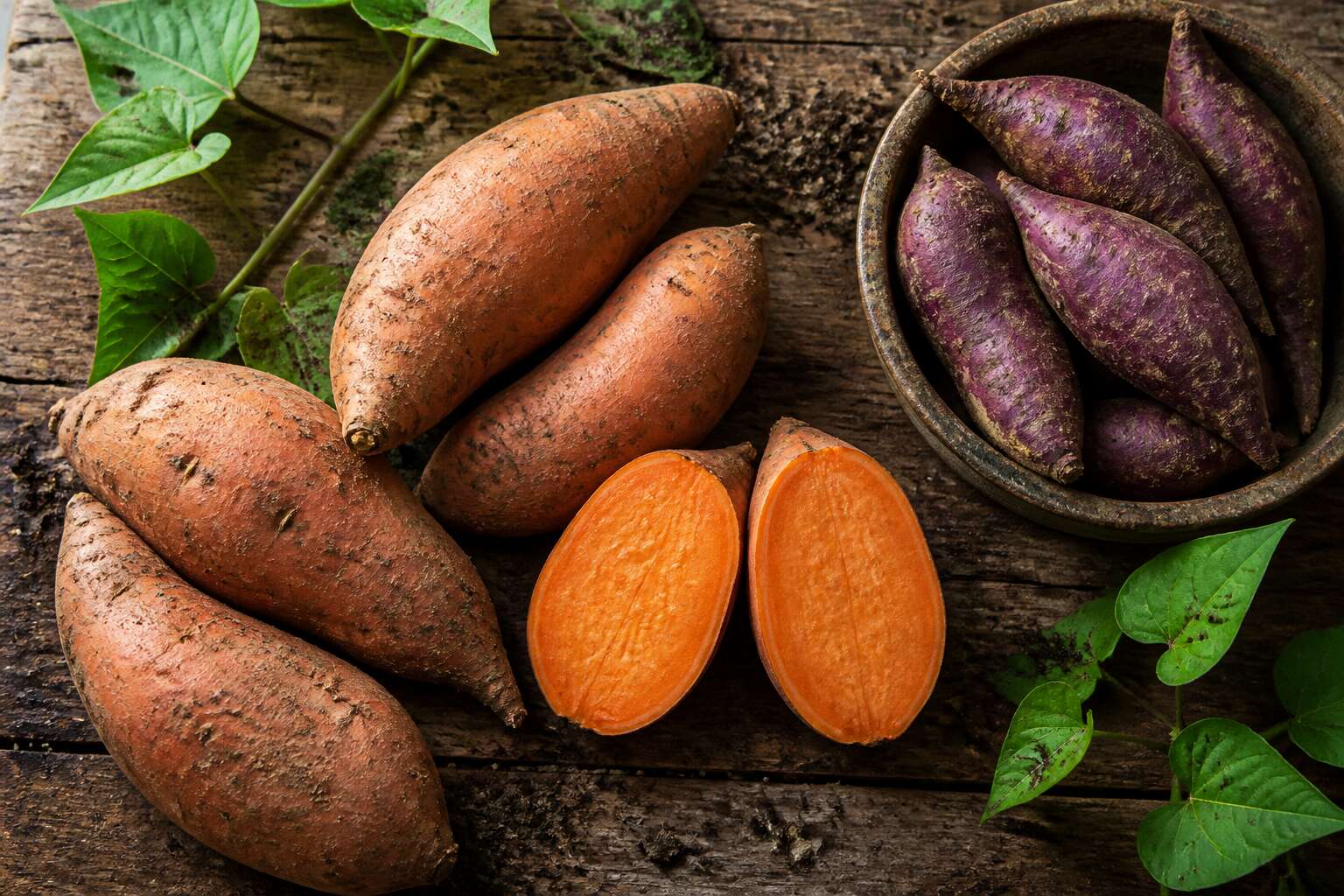
Beneath its rugged, earth-brown skin lies a flesh that changes character depending on the variety. Some sweet potatoes glow a deep, sunlit orange, while others hold a pale, almost ghostly cream. The difference is not cosmetic. It signals a shift in what the root offers your body.
Vitamins crowd every gram. A single medium serving delivers a substantial portion of your daily vitamin A needs, largely in the form of beta-carotene. This compound, which gives the flesh its vivid colour, quietly supports your vision and immune system. I find that practical density remarkable for a food that costs so little.
- Vitamin C supports tissue repair and collagen production
- Potassium helps regulate fluid balance and blood pressure
- Manganese contributes to bone formation and metabolism
- Dietary fibre slows digestion and feeds gut bacteria
The fibre content also tempers how quickly the natural sugars enter your bloodstream, which is why sweet potatoes affect energy levels differently than white bread or refined snacks. They carry anthocyanins too, especially in the purple varieties, which act as antioxidants. So when you ask is sweet potato healthy, the answer lies in this layered nutritional profile. South African kitchens often boil or roast them whole, a method that preserves most of these compounds. That simple preparation turns an ordinary root into a staple worth keeping close.
Evidence-Based Health Benefits
The question is sweet potato healthy often arises when I speak with rural communities. I have watched families in Mpumalanga rely on this root for generations. The orange flesh contains beta-carotene, a precursor to vitamin A, which supports vision and immune function. One medium sweet potato offers over 400% of your daily vitamin A requirement. That is significant.
The fiber content deserves attention too. It feeds beneficial gut bacteria and promotes satiety. Boiling sweet potatoes yields a lower glycaemic index than roasting, which matters for blood sugar control. This distinction is important for those with insulin resistance.
Beyond that, consider these evidence-backed benefits:
– Potassium supports healthy blood pressure levels.
– Anthocyanins in purple varieties act as antioxidants.
– Complex carbohydrates provide sustained energy without a sudden spike.
Each benefit emerges from real nutritional science. So yes, asking is sweet potato healthy leads to a confident answer when you consider the evidence.
Potential Drawbacks and Who Should Be Cautious
Sweet potatoes are not without their caveats. For most people, the question of is sweet potato healthy earns a resounding yes. But certain bodies need to tread carefully, and I have seen this firsthand when consulting with clients.
Those with a history of kidney stones should pay attention. The vegetable contains oxalates, which can bind with calcium and form crystals. Moderation becomes the key, not a complete avoidance.
Another group is people managing blood sugar. Although the sweet potato has a lower glycaemic index than its white cousin, its natural sugars still elevate glucose quickly, especially when roasted. Pairing it with a protein source can soften that effect.
Consider this list for caution:
– People on beta blockers, since potassium levels may climb too high.
– Anyone prone to digestive bloating, as the dense fibre can create discomfort.
For these individuals, the answer to is sweet potato healthy is far from simple. It depends entirely on your body’s unique chemistry.
Sweet Potatoes vs. Other Vegetables
One medium sweet potato delivers more than 400% of your daily vitamin A. That single fact answers the question of is sweet potato healthy, but only partially. Other vegetables like spinach or carrots offer their own virtues, yet none match the tuber’s combination of fibre, potassium, and beta carotene.
The real distinction lies in how you cook it. Boiling retains nutrients, while roasting caramelises the natural sugars. In South Africa, sweet potatoes appear in stews, braais, and even desserts. Compared to white potatoes, sweet potatoes have a lower glycaemic index, which matters for blood sugar control. A cup of butternut is similar, but sweet potato wins on antioxidant density.
Consider these comparisons:
- Sweet potato has twice the fibre of pumpkin per serving
- Sweet potato provides more iron than broccoli in the same weight
- Sweet potato suits both savoury and sweet dishes with ease
So is sweet potato healthy? For most people, emphatically yes. It outperforms many standard vegetables in sheer nutrient payload, though variety remains essential. No single food can serve every need, but this orange gem earns its place on your plate.
Best Cooking Methods for Maximum Nutrition
Some nutritionists claim boiling cuts antioxidants by up to half, so the question is sweet potato healthy depends entirely on your cooking pot. I have watched well-meaning cooks drown this root in water, then wonder why it tastes flat. Steaming preserves the delicate nutrients, while roasting deepens natural sugars without wrecking fibre.
My honest preferences:
– Steaming for maximum vitamin C retention
– Roasting for flavour, but use a light drizzle of oil
– Parboiling when you need speed over perfection
Boiling remains the least glamorous, though it does soften the flesh for mashing. A little respect brings out the best! I say yes, this tuber stays healthy, only if you choose your method wisely.




0 Comments