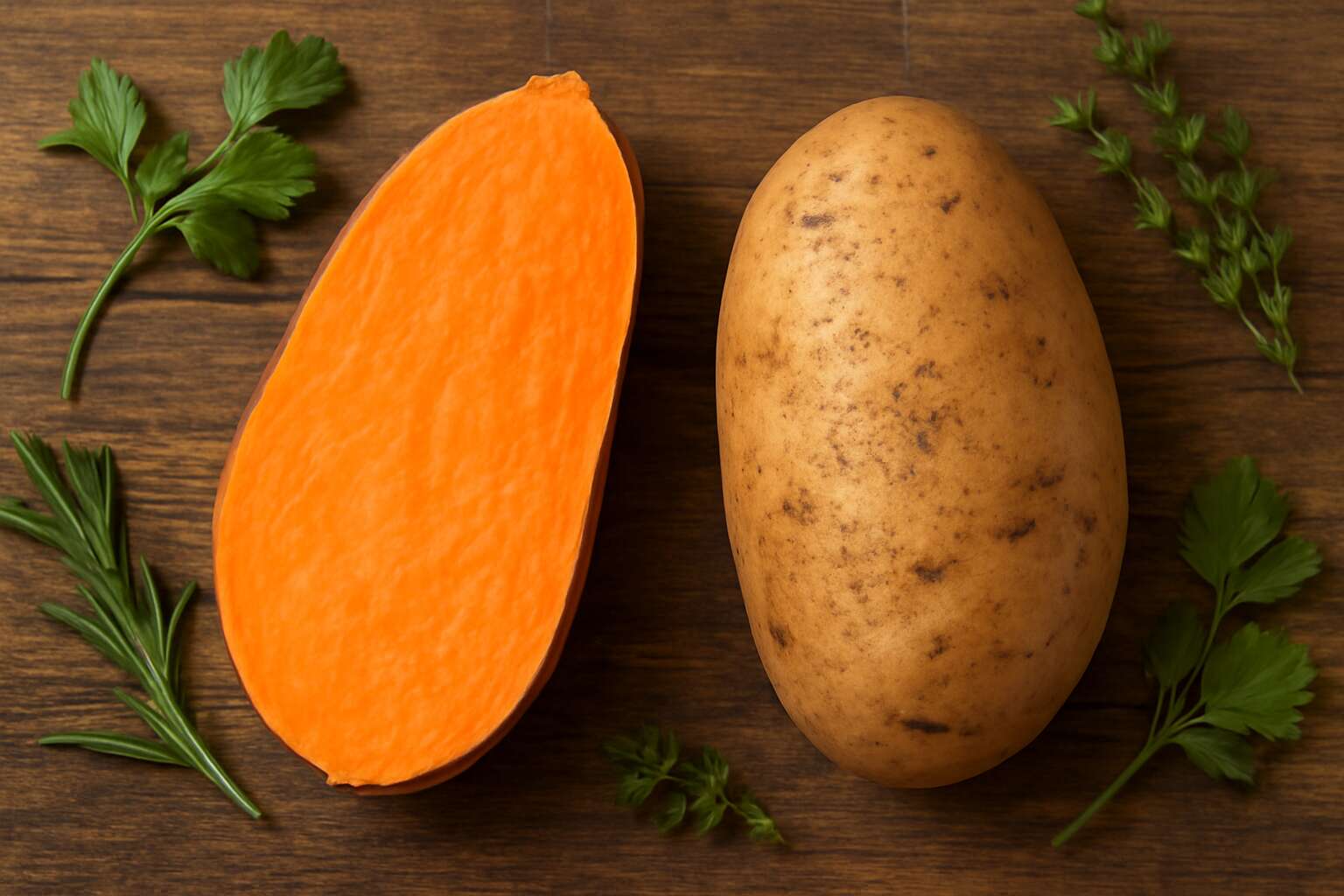
Nutrient Profiles: Sweet Potato vs Potato
Macronutrient overview: carbs, protein, and fat per serving
In the realm of macronutrients, these tubers whisper different tunes. For a typical South African serving, a baked sweet potato (~150 g) offers about 26 g of carbs, 2 g of protein, and virtually no fat. A similar-sized white potato carries roughly 36 g of carbs, 4 g of protein, and a trace of fat. Surprising, yes!
- Carbs: sweet potato ~26 g; potato ~36 g per 150 g serving.
- Protein: potato edges ahead with about 4 g vs sweet potato’s 2 g.
- Fat: both are negligible, under 0.5 g.
Still, the nutrient profile shifts when roasted or fried, and South Africans may value the vitamin A content in sweet potato more than the potato’s steadier energy. I see this balance on kitchen tables across SA—glow and grounding, light and heartiness. The phrase sweet potato vs potato nutrition frames a broader conversation about balance, taste, and context on South African tables.
Key vitamins and minerals: vitamin A, C, B6, potassium, and more
Color signals nourishment, and a quick glance can reveal more than taste. In the realm of sweet potato vs potato nutrition, vibrant orange hues hint at beta-carotene and a vitamin A edge. A SA nutritionist notes the plate can glow with purpose, while earthy white potatoes offer steadier energy.
Key vitamins and minerals to watch include:
- Vitamin A: sweet potato’s beta-carotene content is notably high, supporting vision and immunity.
- Vitamin C: both tubers contribute, with potato offering a reliable dose that supports collagen and antioxidant protection.
- Vitamin B6: potatoes edge ahead, aiding metabolism and neurotransmitter function.
- Potassium: both provide this mineral important for blood pressure; potatoes generally deliver a robust amount.
- Other minerals (iron, magnesium, manganese) present in smaller amounts but contribute to overall balance.
On South African tables, these profiles translate into a dance of flavor and function—glow and grounding, sweetness and heartiness—without sacrificing practicality.
Fiber content and impact on digestion
In the South African kitchen, fibre is flavor’s quiet ally. In the realm of sweet potato vs potato nutrition, fibre content and its digestion effects shape how we feel between plate and palate. “Food is medicine,” my grandmother used to say, and sweet potato fibre tends to include more soluble fibre, which can ease digestion and feed friendly gut bacteria, while white potatoes offer a steady dose of insoluble fibre that supports regularity and bulk.
Consider these fibre traits at a glance:
- Soluble fibre helps slow digestion and stabilise blood sugar.
- Insoluble fibre adds bulk and supports regularity.
- Fibre interactions with minerals like potassium can influence absorption.
Cooking can influence fibre availability, but the core balance remains: both tubers contribute to a digestive-friendly profile.
Glycemic index and portion control guidance
In the realm of sweet potato vs potato nutrition, glycemic index and portion control weave a quiet spell through South African kitchens. ‘Energy is the thread that stitches meals to mood,’ my grandmother would murmur. GI hints how fast carbohydrates lift blood sugar, and how large a portion can tilt the balance. Sweet potatoes often deliver a gentler rise, especially when boiled, while white potatoes can climb higher with baking or mashing. Both nourish, but their digestion tempo differs.
Cooking method, variety, and pairing shape the glycemic response more than the tuber alone.
- Cooking method shifts GI: boiling generally lowers the spike for both tubers compared with baking.
- Variety matters: orange-fleshed sweet potatoes lean toward steadier releases than many white potatoes.
- Pairing with protein or fat can smooth the rise, keeping energy steady after the plate.
Ultimately, the glycemic profile is a thread in the broader tapestry of sweet potato vs potato nutrition, offering flexibility for meals that please both palate and physiology.
Calorie comparison and serving-size considerations
In the tapestry of nutrient profiles, calories drift like a soft South African breeze. When weighed by the same portion, the two tubers often share a similar energy footprint, though cooking method tips the scale. Boiled forms stay gentler on the plate, while baking can push the numbers higher. The colors—orange versus white—shape energy density and how fullness whispers back to the body.
- Cooking method shifts energy numbers for both tubers; boiling tends to lower the spike
- Orange-fleshed varieties often feel more satiating per portion
- Weight-based serving comparisons help the story of calories stay balanced
Serving-size considerations remind us that portion is destiny; a larger tuber isn’t always more energy than a smaller one, depending on density and variety. The energy math lives in context, where flavor and nourishment mingle, and the conversation about sweet potato vs potato nutrition continues to whisper through the pantry.
Health Benefits and Considerations
Eye health and immune support from beta-carotene and vitamin C
Sweet potato vs potato nutrition unfolds like a vivid fable on South African tables, where one orange tuber can outshine many staples for beta-carotene. This pigment, a vitamin A precursor, guards the eyes and sharpens vision, while the potato keeps a steady, dependable profile. It’s a reminder that color and culture together shape our daily meals.
Two notable benefits for eye health and immune support arise from these nutrients:
- Eye health: beta-carotene converts to vitamin A to support the retina and night vision.
- Immune support: vitamin C strengthens immune function and helps protect tissues.
Across the sweet potato vs potato nutrition narrative, color, mineral content, and culinary versatility weave a memorable arc through SA kitchens, inviting curiosity about how small choices influence wellbeing and flavor.
Blood sugar management: glycemic response and fiber roles
‘The plate tells the story of your day,’ an elder in our community likes to say, and in sweet potato vs potato nutrition the tale is written in fiber and sugars. I’ve seen how a simple bowl can slow a morning rush and balance energy, because blood sugar management hinges on how quickly starch becomes glucose, a process we call glycemic response. Here, fiber plays a starring role, slowing absorption and helping steady energy; the contrast between orange-fleshed sweet potatoes and paler potatoes comes alive in everyday meals.
- soluble and insoluble fiber content and how they differ in their effects on digestion
- starch structure (amylose versus amylopectin) that influences rate of glucose release
- cooking method and portion size that alter glycemic impact
These nuances matter on SA tables, where meals cradle family rhythms and the day’s work. Flavor guides the choice, while fiber and cooking shape the glycemic voyage more than any single ingredient.
Antioxidants and phytonutrients: beta-carotene vs polyphenols
Color on the plate is currency and clue. In sweet potato vs potato nutrition, the orange-fleshed roots stash beta-carotene, a potent antioxidant that signals metabolic resilience, while the paler varieties lean on polyphenols to steady inflammation and cellular signals. That color-language matters in daily meals, shaping how we feel from sunrise to sunset and how South African kitchens balance flavour with frame.
Two star players deserve a closer look:
- beta-carotene: a vitamin A precursor linked to protective effects in tissues that depend on light-sensing and barrier function
- polyphenols: a diverse family that modulates oxidation and inflammatory pathways
Beyond taste, these phytonutrients color the body’s defense in subtle, enduring ways, reminding us that a simple starch can carry a surprising richness.
Allergenicity, oxalates, and potential cautions
Color is currency on South African plates, and the tale of health writes itself in warm orange and calm cream. In the ongoing sweet potato vs potato nutrition discussion, the hue signals subtle stories about how our bodies respond after meals. Orange-fleshed roots often carry signals of resilience, while paler varieties balance with their own complex bioactives. The net effect is a kitchen map that guides mood and energy across a South African day.
Allergenicity, oxalates, and cautions deserve a careful glance in everyday eating.
- Allergenicity: rare reactions may occur; observe symptoms and seek advice if concerned.
- Oxalates: both crops contain oxalates; individuals with kidney stone histories should discuss intake with a clinician.
- Potential cautions: be mindful of sprouts, green areas, or spoilage that can signal higher risk.
These considerations sit quietly in a modern pantry, inviting readers to treat roots as storytellers rather than simple starch.
Weight management implications and satiety
Colorful plates anchor our health narratives, and in the sweet potato vs potato nutrition comparison, the hue hints at different energy trajectories after meals. Orange-fleshed roots offer a warming blend of beta-carotene and potassium, while paler spuds balance with resistant starch and minerals. Health benefits emerge not from a single nutrient but from how fiber, bioactives, and cooking methods work together to sustain mood and energy across a South African day.
- Satiety and weight management rise with higher fiber and volume—helps curb overeating without sacrificing satisfaction.
- Glycemic response is nuanced: cooking method and portion shape how quickly you feel hungry again.
- Variety matters: different cultivars carry distinct antioxidant profiles, expanding the palate and nutrient spectrum.
Beyond taste, mindful choices—skin-on potatoes and roasted orange sweet potatoes—contribute to balanced energy without tipping calories, supporting long-term wellness on a local table.
Culinary Uses and Preparation Techniques
Cooking methods to maximize nutrient retention: roasting, boiling, steaming
The sweet potato vs potato nutrition debate hinges on cooking method, a reality in South Africa where pantry staples meet kitchen fires. A medium sweet potato can deliver over 400% of the daily value of vitamin A, so choosing how it’s prepared matters for nutrition and flavor.
Roasting enhances caramelization and preserves the edible skin, a source of fiber. For maximum nutrient retention, keep skins on and cut evenly.
Practical tweaks to maximize retention:
- Roasting: caramelization and skin-on texture help maximize flavor and fiber.
- Boiling: water contact can reduce some vitamins; save cooking water.
- Steaming: gentle method preserves beta-carotene and vitamin C.
Storage tips for freshness and flavor
A medium sweet potato can deliver over 400% of the daily value of vitamin A. Across South Africa, the sweet potato vs potato nutrition conversation shapes how we cook and share meals. When treated with restraint and curiosity, a tuber becomes nourishment that is as much about approach as ingredient.
Storage and handling can make or break freshness. For freshness and flavor, try these tips:
- Store whole tubers in a cool, dark, well-ventilated spot (not the fridge).
- Refrigerate cut pieces in an airtight container to reduce browning.
- Brush off dirt and avoid washing before storage.
- Discard any tubers that are soft or moldy.
Pairing them thoughtfully—citrus brightness or herbal warmth—lets texture and sweetness shine while keeping nutrition in view.
Knife skills and prep notes for even cooking
Under the pale glow of the kitchen lamp, texture becomes truth in the sweet potato vs potato nutrition debate. The knife is not merely a tool but a cautious pen, sketching even slices that brown in unison and yield interiors that stay tender. In quiet South African kitchens, uniform cuts unlock hidden sweetness and ensure consistent cooking.
- Maintain uniform thickness so heat travels evenly through each piece
- Choose a sharp blade; a dull edge disrupts texture
- Consider a light pre-treatment to promote even tenderness
- Pierce skins or score lightly to prevent curling under high heat
Choose a method—roasting for depth, steaming for silk, or crisping for snacks. Whether you’re braaing wedges in a fire pit or simmering on a stove, even cuts keep flavors aligned and nutrients intact.
Flavor pairings and seasoning ideas for each: sweet potato vs potato
Wedges crackle on a braai and in a hot oven; texture becomes the telltale sign in the sweet potato vs potato nutrition debate. Roasting yields caramel notes, steaming yields silk, and crisping turns snack-time into a show. Uniform cuts ensure even heat and predictable tenderness.
Flavor pairings set the stage for both roots to shine.
- Sweet potato pairings: cinnamon, nutmeg, smoked paprika, and lime; finish with coconut milk or miso glaze for balance.
- Potato pairings: garlic, rosemary, black pepper, sour cream, and chives; a drizzle of olive oil and sea salt completes the roasty note.
Roasting adds depth, steaming maintains silkiness, and crisping turns snacks into treats—these approaches align flavors with the nutrition profile familiar in South African kitchens.
Meal ideas: quick breakfasts, lunches, dinners, and snacks
Gothic kitchen lanterns flicker as pantry letters whisper: meals rise from humble roots with a shadowed glow. In the realm of sweet potato vs potato nutrition, texture and technique stage the drama—roast for caramel depth, steam for silk, and crisp for a snack that crunches with secrets. The pace of blades and heat is precise, for uniform cuts guarantee even tenderness across the board!
In SA kitchens, quick breakfasts spark sunrise, lunches become pantry poetics, dinners conjure warmth, and snacks celebrate crunch. Roasting deepens flavor, steaming keeps silk-bread textures, and crisping transforms leftovers into street-food theatre. Meal ideas unfold as follows:
- Breakfast: roasted sweet potato hash with eggs and herbs
- Lunch: potato-based grain bowls with smoky paprika and greens
- Dinner: caramel-spiced sweet potato wedges with garlic-rosemary drizzle
- Snack: crisp chip-thin potato slices or sweet potato chips, baked until crackling
Practical Guidance: Shopping, Sustainability, and Diet Planning
Choosing quality: color, texture, and origin considerations
Practical guidance for shopping, sustainability, and diet planning centers on choosing quality: color, texture, and origin considerations. In South Africa, markets glow with earthy warmth from both sweet potatoes and russet potatoes, each variety telling a different soil story. A quick observation—firmness and color hint at nutrient density and cooking behavior. Opting for locally grown roots trims transport miles and supports community farmers—luxury in a well-tuned kitchen.
- Firm, smooth skin with no soft spots signals reliable texture for even cooking.
- Color and origin matter: choose locally produced roots when possible.
When framing diet plans, consider how sweet potato vs potato nutrition aligns with fiber goals and energy needs. Thoughtful sourcing—seasonal and ethical—supports sustainability while nourishing the palate, a reminder that nourishment can be refined yet rooted in the land we share.
Budget-friendly buying and seasonal availability
Markets glow with earthy warmth, and a South African producer might quip that seasonal roots taste better and cost less. When weighing sweet potato vs potato nutrition, practical shopping and diet planning hinge on origin, season, and budget.
- Locally produced roots reduce transport miles and support farmers.
- Seasonal availability tends to deliver better flavor and value.
- Firmness and color offer quick cues on quality and cooking behavior.
Thoughtful sourcing—seasonal and ethical—nourishes both palate and planet, turning everyday meals into a small sustainable act.
Sustainability and farming practices: organic vs conventional
Root-driven decisions in South Africa’s markets blend taste with ethics; when evaluating sweet potato vs potato nutrition, origin and farming philosophy share the stage with flavor, shaping what lands on our plates, and I feel this blend acutely as I walk the markets! Organic vs conventional farming is a living debate, its outcomes etched in soil health, residue profiles, and the long arc of health.
- Soil health and biodiversity
- Pesticide exposure and residue considerations
- Water use and carbon footprint
- Local availability and price signals
For diet planning, sustainability should guide appetite as much as budget, and the seasonal harvest should be savored for the communities it nourishes, reinforcing the idea that nutrition, ethics, and taste thrive on South African tables!
Incorporating into diverse diets: vegan, gluten-free, paleo-friendly notes
In South Africa, root shoppers increasingly pair flavor with ethics—roughly 40% say origin and farming method shape their purchase as much as taste. In the debate of sweet potato vs potato nutrition, your basket becomes a map of soil, season, and values.
Shop for resilience: choose firm, unblemished roots, the season, and the organic vs conventional debate in relation to residue and water use. Local markets frequently offer fresher options with potentially lower carbon footprints; price signals can hint at quality and provenance.
- Vegan: sweet potato adds beta-carotene and fiber to meatless meals.
- Gluten-free: both are naturally gluten-free, ideal for simple, hearty plates.
- Paleo-friendly: sweet potato is often preferred for nutrient density; white potato can fit in moderation where allowed.
For diet planning, these notes weave into seasonal menus across SA, balancing taste, nutrition, and ethics without sacrificing heartiness.
Myth-busting: common misconceptions about sweet potatoes and potatoes
Across SA, 40% of shoppers say origin and farming method shape purchases as much as taste. In the debate of sweet potato vs potato nutrition, your basket maps soil, season, and values.
Practical notes bridge markets and meals, inviting a thoughtful, ethics-conscious view of root choices.
- Origin, farming method, and provenance shape flavor as much as texture.
- Organic vs conventional debates touch on residues and water use across seasons.
- Local markets may offer fresher options with lower carbon footprints and richer narratives.
Myth-busting: Common misconceptions crumble under light. Some claim all potatoes spike sugar; truth lies in glycemic response, preparation, and fiber, while sweet potato brings beta-carotene and fiber.
As SA menus turn with the seasons, sweet potato vs potato nutrition remains a saga of taste, resilience, and responsible choices.

0 Comments