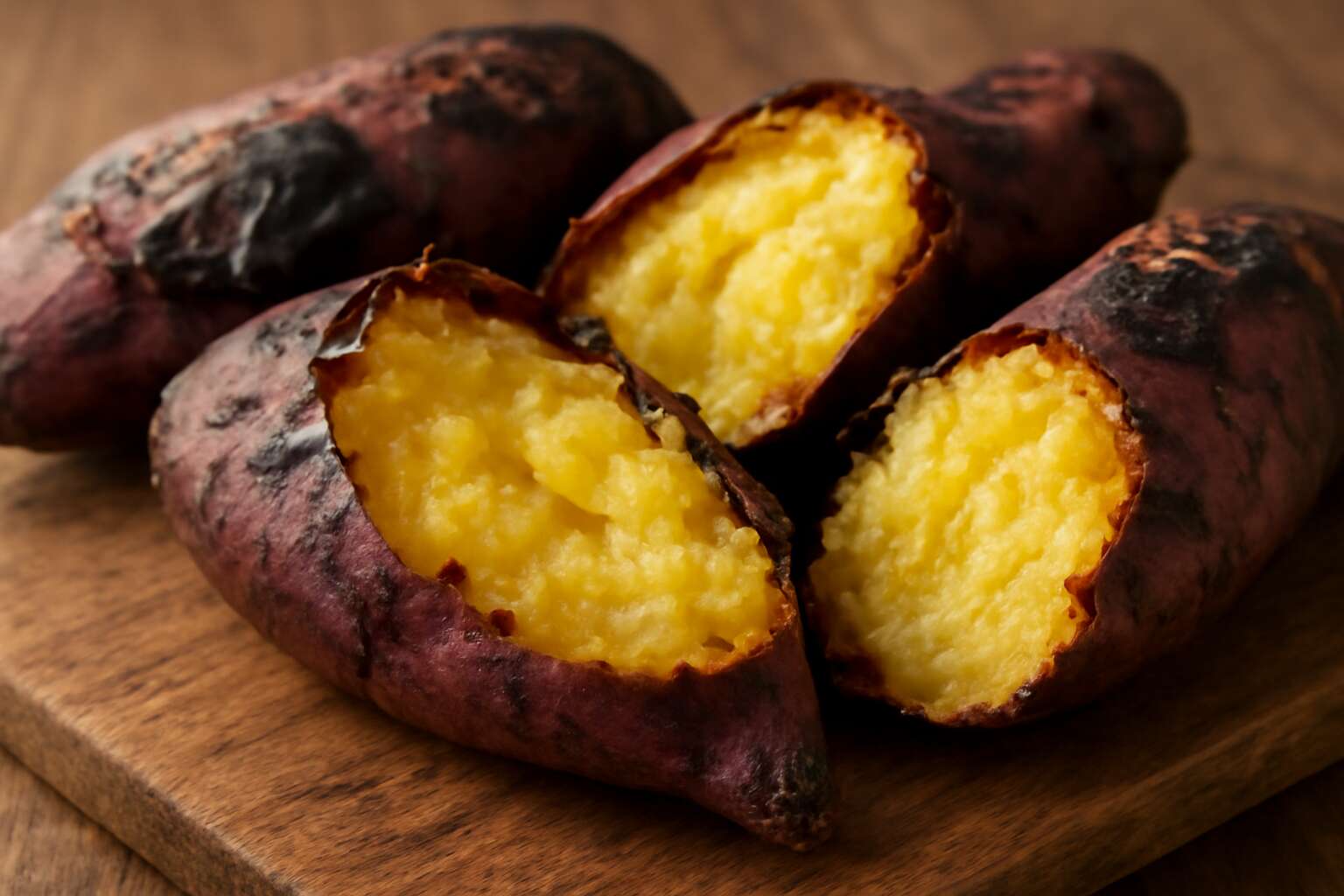
Grilled Japanese Sweet Potato Basics
Why Japanese sweet potatoes shine on the grill
Great grilling begins with a whisper of starch and smoke, a line chefs in South Africa swear by. The grilled Japanese sweet potato turns that whisper into a chorus, its velvet flesh and caramel edges catching the light like embers on a capricious evening.
Basics tilt the balance toward success: firm tubers, thorough scrubbing, and a dry surface contribute to even caramelization. If you’re curious how to grill japanese sweet potato, the approach embraces indirect heat, a thin sheen of oil on the skin, and a lingering warmth as sugars mellow and deepen. The reward remains a tender interior with a hint of smoke and a glossy, honeyed finish.
- Texture: skin blistered, flesh creamy and bright
- Sensory: smoke and caramel bring depth to sweetness
- Pairings: herbs, citrus and olive oil lift the potato’s profile
In one bite, it becomes a narrative—soft, sweet, with a whisper of char—perfect alongside braai staples or herb-flecked salads.
Choosing the right varieties and sizes
Grill-season in South Africa hums with potential when tubers are chosen with intention. The basics of selection begin here: variegated textures and sizes that promise even caramelization and a tender center anchor a successful cook.
When considering how to grill japanese sweet potato, seek varieties that carry distinct character—Murasaki with purple skin and pale flesh, Satsuma-imo with copper skin and bright interior, and a gold-skinned option for a lighter sweetness. Size matters, too: hand-sized tubers distribute heat more evenly and fit more predictably beneath a lid.
- Murasaki: purple skin, creamy flesh
- Satsuma-imo: copper skin, vibrant interior
- Gold-skinned types: milder sweetness and lighter texture
These choices shape how to grill japanese sweet potato with confidence, revealing a harmony of smoke and sweetness that writes itself across a South African table.
Essential tools and fire management
Grilling Japanese sweet potato at a South African braai turns a humble tuber into a memory you can taste. A well-tuned fire and patient hands unlock coppery crust and velvet centers—how to grill japanese sweet potato becomes a quiet ritual as sure as sunrise over a corrugated-iron roof.
Tools are more than gear; they’re a small ritual in themselves. For this simple triumph, gather:
- Heavy-duty tongs
- Long-handled spatula
- Heatproof gloves
- Sturdy grill brush
Fire management is about listening to the flame. Keep heat steady, favor indirect zones for even caramelization, rotate tubers for uniform color, and watch the breeze that can spark a flare. In South Africa, a mix of coal and a lid makes the moment linger.
Health and flavor considerations
Fire narrates its own story in a country of braais, and how to grill japanese sweet potato becomes a quiet rite that turns a simple tuber into a memory you can taste.
Health considerations tumble forward with the potato: beta-carotene brightens vision, fiber keeps digestion steady, and resistant starch offers gentle energy release. This orange flesh nourishes without heaviness, making it a friendly companion to roasted vegetables and bright sambals.
- Beta-carotene supports eye health.
- Resistant starch aids gut comfort.
- Natural sweetness pairs with smoky notes.
Flavour-wise, its natural sweetness carries a caramel edge, pairing beautifully with tangy yogurt, citrus, herbs, and a kiss of heat. A South African table can welcome this tuber as a versatile, comforting canvas for bold accompaniments.
Preparation Steps for Perfect Grilled Sweet Potatoes
Washing, drying, and starch reduction
South Africa’s weekend braai scene has seen 42% more Japanese sweet potatoes on the coals this season, a testament to their velvet sweetness. If you’re curious how to grill japanese sweet potato, I begin with a ritual of washing and drying that invites the natural sugars to emerge and the skin to glow when kissed by flame.
- Gentle cleansing to remove soil while preserving the skin’s luster.
- Thorough drying to prevent moisture from blurring the grill’s sear.
- Light starch reduction through a brief water contact, followed by another dry pat for a crisp edge.
This quiet preface sets up a symphony of caramel and smoke once the pot meets heat.
Piercing, soaking, and pre-grilling prep
Under a SA sunset, the braai becomes a storyteller. For those chasing perfection in how to grill japanese sweet potato, a mindful start sets the stage: a gentle pierce, a calm soak, and a skin that will glow when kissed by flame.
Consider these gentle steps:
- Pierce the potatoes with a fork to vent steam and prevent bursting
- Soak briefly to loosen starch and promote even cooking
- Dry thoroughly and rest before hitting the grill so the skin crisps
On the flame, patience turns into a velvet sweetness, with stray wisps of smoke curling around the tubers and inviting bites that sing softly across a crowd.
Seasoning options before grilling
Under the SA sunset, a braai transforms the humble tuber into a whispered triumph. how to grill japanese sweet potato becomes a meditation on patience, heat, and velvet sweetness. I watch the glow inch along the skin and listen for a soft sigh of steam, a promise that the interior will glow with quiet richness.
- Yuzu-soy glaze with sesame
- Smoked paprika, honey, and a hint of chili
- Herb butter with lemon zest
Before the grate awakens, I choose seasoning that speaks softly rather than shouts. The aim is balance: a little something acid, a touch of sweetness, a whisper of smoke. These options let the tuber breathe on the grill and align with SA palate—elegant, not loud, and infinitely versatile. how to grill japanese sweet potato reveals itself as a choreography of flavor.
On the flame, patience and aroma become an invitation—simple, radiant, and unmistakably South African in its heart.
Cutting shapes for even cooking
Preparation steps for perfect grilled sweet potatoes hinge on geometry. Uniform shapes—rounds, planks, or wedges—ensure the core and the edge arrive at the same time, a quiet math that keeps the grill honest. For those curious how to grill japanese sweet potato, consistency is king: same thickness everywhere so the exterior caramelizes in sync with the interior.
- Shape pieces in uniform thickness for even cooking
- Lightly oil surfaces to promote a lacquered crust
- Give each piece breathing room on the grate
With the geometry set, the final flourish is restraint: a gentle flip, mindful oiling, and patience as colors deepen. Such preparation yields a tender, velvet interior and a glossy skin—subtle, elegant, and unmistakably suited to a South African table.
Preheating the grill and heat setup
South Africa’s grills demand rhythm over rain. Begin with a clean grate and a robust flame, then establish two zones: a hot edge for a quick sear and a cooler area for finishing. If you’re using charcoal, push the coals to one side; gas grills work with half the burners lit and the rest off. Let the setup breathe a few minutes before you lay down the potatoes; if you’re wondering how to grill japanese sweet potato, steadiness is your edge.
- Target heat around 200-230°C and keep the lid closed to stabilize.
- Lightly oil the grates to reduce sticking and encourage lacquer.
- Maintain even spacing so each piece colors evenly.
- Indicate a two-zone setup for direct and indirect cooking for balance.
Let the heat settle and the process become almost meditative—the moment when edges glow and interiors glow with velvet generosity.
Grilling Techniques for Even Cook and Texture
Direct vs indirect heat strategies
Heat is the quiet innovator of success on the grill. In South Africa, a compelling stat: 58% of home grillers report better texture when heat is layered rather than blasted. Grilling Japanese sweet potatoes rewards patience and nuance.
For those curious how to grill japanese sweet potato, the model rests on two temperature acts: a direct kiss to sear the surface, and a gentle indirect zone to coax creamy center.
- Direct heat scars the surface with caramelization and crisp edges.
- Indirect heat shelters the interior, yielding a tender, evenly cooked heart.
- Alternating zones on the grill provides a choreography of browning and creamy center.
The art lies in balancing browning and tenderness, letting smoke carry sweetness to the fore. The result is a confident, summer-ready staple that sits gracefully on the South African table.
Temperature targets and timing
Sunset crimsons cloak the grill as a statistic whispers from memory: 58% of South African grillers swear layered heat outperforms blasting flame. how to grill japanese sweet potato reveals itself as a velvet ritual—no drama, only depth, as the potato sighs open to the smoke and the night air carries its sweetness toward the stars!
Aim for an interior around 90–95°C (194–203°F) to coax starch into cream without collapsing the heart. The exterior should glow bronzed, caramelizing sugars in a measured arc, while the center remains tender and yielding to the bite. With the right tempo, you harvest sweetness rather than scorch.
Total time sits around 25–35 minutes, with checks and a patient flip halfway. Read the potato by feel—when the skin loosens and the knife glides in with ease, you are near the sweet center. Can it be mastered through tempo and texture?
Flipping, rotating, and browning tips
58% of South African grillers swear layered heat outperforms blasting flame. On a gentle bed of embers, I watch the Japanese sweet potato surrender its starch in slow ribbons, guided by deliberate turns rather than blaze.
From my side, for even cook and texture, keep slices spaced, flip halfway, and let the surface blush bronze rather than burn. A light drizzle of oil and a moment of rest post-grill seal in sweetness.
If you’re wondering how to grill japanese sweet potato, settle into a steady rhythm and listen to the skin loosen as the center softens.
- Rotate pieces frequently so every face meets heat for even browning.
- Flip halfway to ensure a uniform glow across all sides.
- Keep the grill uncluttered and avoid crowding to prevent steaming rather than searing.
Testing doneness and tenderness
The grill whisperer swears the juiciest centers emerge when patience speeds to the flame. For anyone curious how to grill japanese sweet potato, the trick is to treat it like a prized jewel: steady heat, deliberate turns, and a playful wisp of smoke. Braai nights in South Africa nod in quiet agreement.
Testing doneness is a choreography, not a countdown. Look for a uniform glow and a soft yield; the center should surrender with gentle pressure. Use these checks:
- Skewer or knife should meet little resistance in the center
- Center should feel springy yet tender when pressed
- Rest briefly after removing from heat to finish carryover cooking
When the surface blooms bronze and the interior collapses into velvet, remove and let rest. The aim is a knife-tine wobble that invites a bite, not a dry, starchy chew. A light splash of oil can linger on the plate, letting sweetness do the talking.
Finishing touches and foil-wrapped methods
Grilling Japanese sweet potato to a velvet center is a study in tempo. The trick for even cook and tender bite is steady heat, measured turns, and a touch of patience. When I explore how to grill japanese sweet potato, I picture a quiet drumbeat—the flame whispers, the tubers surrender to gentle rotations, hinting at sweetness with each pause.
For the foil-wrapped method that locks in moisture, try these steps:
- Wrap each potato in foil with a splash of water or oil to generate steam.
- Place on indirect heat until the skin loosens and the interior softens.
- Unwrap and finish over direct heat to bronze and bloom the flavor.
Finish with a light drizzle of oil, a pinch of flaky salt, and a brief rest so the sugars settle into silk. When the surface bronzes and the center yields with a velvet hint, the grill’s quiet reveal becomes dinner’s highlight!
Flavor Enhancements and Serving Ideas
Glazes and sauces that pair with Japanese sweet potatoes
A recent South African food poll found that 72% of weekend grills rise to new heights when a glossy glaze lands on the potato. The sweet potato’s caramel notes sing with a touch of salt, and the grill’s smoke adds depth that lingers long after the bite.
When you explore how to grill japanese sweet potato, flavor boosters unlock its character—sea salt, citrus, and umami work in concert with the char. I taste that shift in every bite.
- Miso-maple glaze with sesame oil
- Soy-sesame glaze with rice vinegar
- Yuzu-honey glaze for a bright finish
- Brown-butter and vanilla sugar glaze
Serve the glazed potatoes with a dollop of yogurt, a squeeze of lemon, and a peppery green salad—the contrasts make the glaze feel like a small revolution on a plate.
Savory toppings such as miso butter and sesame oil
Flavor boosts lift Japanese sweet potatoes from side dish to showstopper. In South Africa, backyard grills sing when a glossy glaze isn’t the only star—the savory accents steal the spotlight. For those curious how to grill japanese sweet potato, the right notes unlock its character and invite a crowd to linger over the char.
Savory toppings shine: miso butter adds umami richness, and sesame oil brings toasty depth that lingers. The trick is balance—tiny amounts go a long way and pair beautifully with a pinch of sea salt.
- miso butter
- sesame oil
- furikake
- chili crisp
Serve with a dollop of yogurt and a squeeze of lemon, letting the greens provide a peppery counterpoint to the glossy potatoes.
Pairings with grains and proteins
South African grill nights crave that glossy glow and a hint of char. The crowd loves a side that can stand up to smoky braai moments, and sweet potato has become a quiet star. how to grill japanese sweet potato opens a path to balance sweetness with savor.
Flavor enhancements lean into glaze and spice that lift the potato without overpowering it. Think soy-citrus glaze with a kiss of honey, plus a brush of olive oil and a pinch of sea salt. A final flourish of heat or crunch adds personality that lingers after the bite!
Serving ideas pair with grains and proteins for a complete plate on a South African table.
- Grains: jasmine rice, quinoa, bulgur, millet
- Proteins: grilled chicken, salmon, chickpeas, halloumi
Serving ideas for different meals
Flavor enhancements lean into glaze and spice that lift the potato without overpowering it; a soy-citrus glaze kissed with honey, brushed olive oil, and a pinch of sea salt wake the surface. A final whisper of heat or crunch lingers after the bite. When considering how to grill japanese sweet potato, aim for a glossy char that mirrors a braai’s smoky glow, not a scorched chorus.
Serving ideas for different meals keep the potato singing across the day. Try it beside grain bowls, with a note of citrus; let it anchor a braai-side platter; or fold warm slices into a chickpea or halloumi salad for lunch.
- Braai-friendly slices with greens and chickpeas
- Quinoa or millet bowls as a bed for the potato
- Salmon or halloumi skewers on top




0 Comments