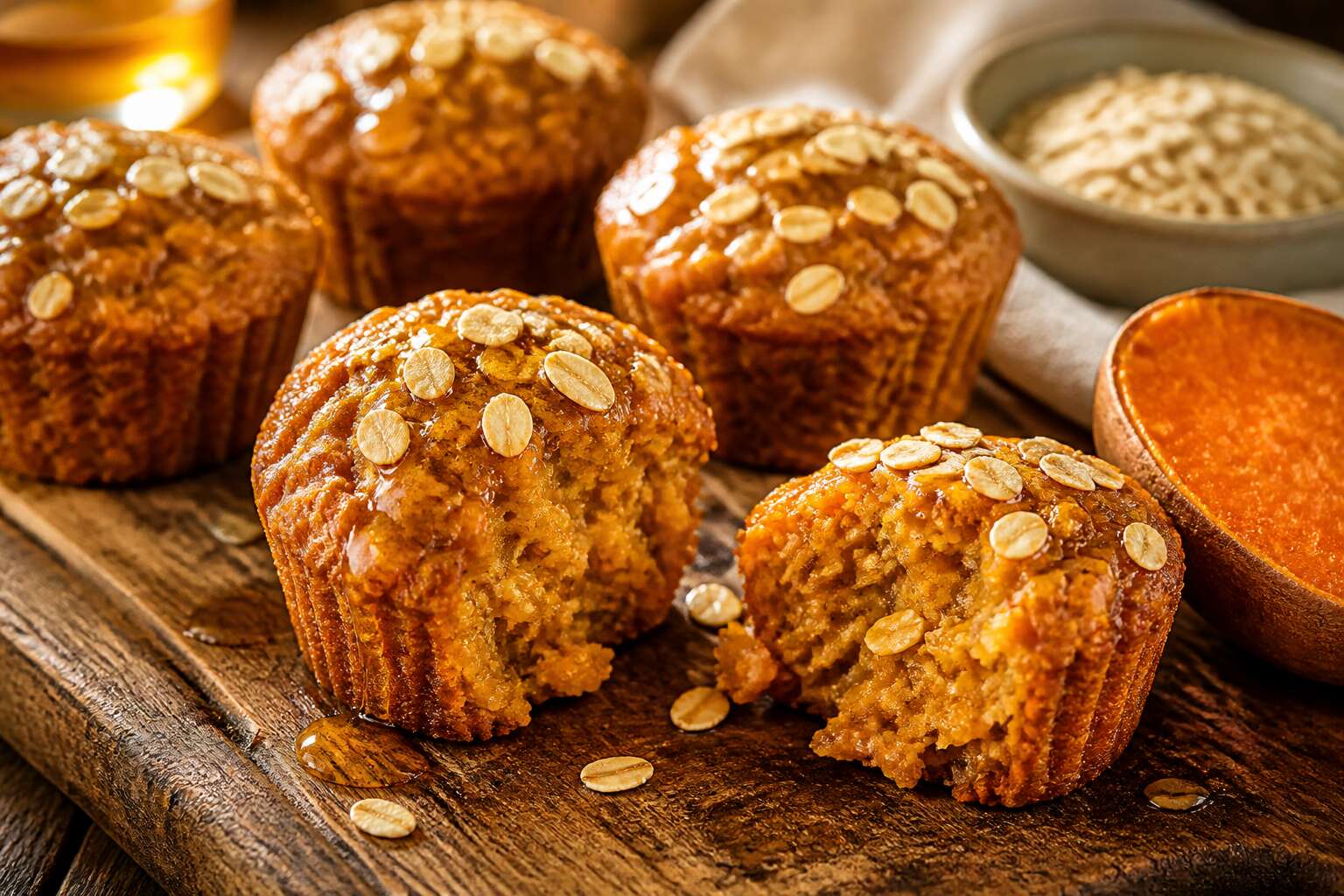
Nutritional Benefits of Baking with Root Vegetables
Key Vitamins and Antioxidants in Sweet Potatoes
A medium baked sweet potato delivers around 400% of your daily vitamin A requirement, mostly as beta carotene. That antioxidant alone supports vision, skin integrity, and immune response. When you bake with this root vegetable, those compounds survive the heat, making muffins far more than empty comfort.
The nutritional profile runs deeper than vitamin A:
– Anthocyanins in purple flesh varieties, which neutralise free radicals
– Vitamin E, which protects cell membranes from oxidative damage
– Manganese, a trace mineral critical for bone formation and glucose metabolism
These nutrients pair well with oats, whose soluble fibre slows sugar absorption. A batch of sweet potato oatmeal muffins becomes a functional food, especially when you add seeds or nuts. Root vegetables reward this kind of baking with rich texture and lasting satiety.
How Oats Boost Satiety and Digestive Health
Baking root vegetables transforms their starch structure. Heat breaks down complex carbohydrates into gentler forms, easing digestion while preserving minerals like potassium and magnesium. This is why sweet potato oatmeal muffins satisfy hunger far longer than standard bakery goods.
Oats contribute their own digestive benefits. Beta glucan, a soluble fibre unique to oats, forms a viscous gel in the gut that slows gastric emptying. That physical process keeps you fuller for hours and feeds beneficial colon bacteria. In my experience, this makes a real difference for mid-morning cravings.
Consider what this pairing achieves:
- Resistant starch from cooled baked sweet potato fuels gut flora
- Rolled oats add bulk without sharp blood sugar spikes
- The combination sustains steady energy across the morning
Sweet potato oatmeal muffins, baked from scratch, depend on these two ingredients for their nutritional value.
Naturally Sweetening Without Refined Sugar
Roasting a sweet potato changes its character. The oven’s dry heat transforms starches into simpler sugars, which caramelise into a deep, honeyed sweetness. No sugar bowl required. This is why sweet potato oatmeal muffins can rely on the root vegetable alone for their gentler sweetness, avoiding the refined sugar that dominates commercial bakery shelves.
That sugar behaves differently inside the body. Trapped within the sweet potato’s fibrous cell walls, it releases at a slower pace than a spoonful of white sugar would. The result is a steadier energy curve, free from the sharp spikes and crashes that follow over-sweetened snacks. For South African bakers looking to cut back without losing flavour, this is the honest trade: trust the root, skip the bag.
Adapting the Recipe for Special Diets
South Africa’s winter months call for something sturdy in the lunchbox, yet sweet potato oatmeal muffins manage to be both robust and remarkably tender. Baking the root vegetable whole changes its starch structure, which means the muffin crumb stays moist for days without turning gluey. This is a practical advantage when you bake a batch on Sunday and need them to survive until Wednesday.
Adapting the recipe for special diets is simpler than the cookbook publishers would have you believe. The base itself welcomes modification without protest.
– Swap the regular oats for certified gluten free varieties, and the texture barely shifts.
– Replace the butter with coconut oil or a neutral seed oil for a dairy free version.
– Use a flax egg instead of a chicken egg, and the muffins still hold their shape.
Each substitution works because the sweet potato provides the structural integrity. The root vegetable carries the moisture, the oats supply the bulk, and the fat merely assists in browning. For those watching their blood sugar, the natural fibre in both ingredients slows digestion considerably. I have served these at a morning meeting in Johannesburg and watched colleagues reach for seconds without realising they were eating something designed to be sensible. That is the quiet magic of baking with roots.
Ingredient Selection and Smart Substitutions
Choosing the Best Sweet Potato Variety
At the risk of sounding like a contestant on a televised cooking show, the variety of sweet potato you choose can make or break your batch of sweet potato oatmeal muffins. In South Africa, the star of the show is usually the deep orange Beauregard, which offers a caramel-like depth when roasted. However, the paler, dry-textured varieties hold their shape differently. Do not grab the first tuber you see. A mushy potato yields a dense muffin, while a stringy one turns your breakfast into a dental floss exercise.
Consider the moisture content of your selection. Orange sweet potatoes bring the moisture and sweetness, reducing the need for extra liquid. The purple variety offers a drier crumb and a more complex, earthy flavour profile. To master the perfect balance for your sweet potato oatmeal muffins, keep these qualities in mind:
– Roast the flesh to concentrate the natural sugars before mashing.
– Steam rather than boil to prevent waterlogging the cell structure.
– Let the mash cool completely, as heat can activate the gluten in the oats prematurely.
The final texture hinges on this preparation. Respect the potato, and your sweet potato oatmeal muffins will respect you in the morning. A thoughtful substitution list can rescue a recipe, but a change in the base ingredient forces a full re-engineering. Weighing your mash is the difference between a reliable formula and a gamble. While you might be tempted to swap in butternut for flavour, the baking time will shift. Treat the vegetable choice as the primary decision, and the rest of the bake will follow suit.
Rolled Oats vs. Quick Oats: Texture and Performance
Nothing in a sweet potato oatmeal muffin tests your integrity like the hand you play with oats. Quick oats arrive pre-steamed and rolled thin, their structure compromised before they ever touch your batter. They dissolve into a smooth, uniform backdrop, which sounds forgiving but robs the muffin of its countryside soul. Rolled oats, the old-fashioned workhorse, retain a chewy, whole-grain identity that transforms the crumb into something grainy and substantial.
The performance difference reveals itself in the bake. Quick oats absorb liquid instantly, creating a dense, porridge-like interior. Rolled oats demand patience, drawing moisture from the sweet potato mash and yielding a tender, airy rise. For your sweet potato oatmeal muffins, the choice is a quiet vote for character.
– Choose rolled oats when you want structure and a pleasingly rustic bite.
– Choose quick oats only for a smoother texture, then compensate with extra flour.
– Pulse rolled oats in a blender briefly for a middle ground.
The liquid ratio shifts with your selection. A batter built on quick oats needs less milk, while rolled oats invite a splash more to soften their husk. Neither choice ruins the batch; one simply elevates it. The best sweet potato oatmeal muffins taste of honesty, and honesty chews slowly.
Eggs and Flax Eggs for Structure
A single large egg holds about 6 grams of protein. That protein coils and sets during baking, giving sweet potato oatmeal muffins a structure that survives the oven. Without it, the crumb turns friable and dry.
Flax eggs replace that protein with mucilage, a gum that traps water and binds ingredients. Stir one tablespoon of ground flaxseed into three of warm water. Wait five minutes! In my experience, the gel slips into the batter, holding oats and sweet potato mash together with less force, so expect a flatter top.
Choose your binder carefully.
- Whole eggs for maximum lift and a tender, even crumb.
- Flax eggs for a denser, more rustic bite.
Balancing Sweeteners and Spice Blends
The spice blend you choose for these sweet potato oatmeal muffins is as important as the flour. Cinnamon brings warmth, but nutmeg adds a floral complexity that sings alongside the tuber’s sugary notes. Ginger introduces a mild heat that cuts through the richness. A heavy hand with cloves, however, can quickly dominate the bake, turning the crumb acrid.
You also need to balance the sweetness with the moisture content. A liquid sweetener like honey or maple syrup contributes to a softer crumb, while a granulated option, such as coconut sugar, offers a drier bite. The choice affects how the muffin sets. If you swap in a mashed banana for some of the sweet potato, you must reduce the wet ingredients to keep the batter from turning soupy.
For a deeper flavour profile in your sweet potato oatmeal muffins, consider these pairings:
– Allspice and a pinch of cardamom for a chai-inspired lift.
– A spoonful of molasses to add a dark, earthy undertone.
– Orange zest to brighten the dense, heavy crumb.
Getting this right means the spices do not just sit on top of the flavour; they meld with the natural sweetness to create a muffin that is complex without being fussy.
Dairy-Free, Nut-Free, and Gluten-Free Swaps
The scent of toasted almonds in a muffin tin is a lovely thing, but it is not always an option. For those navigating allergies or simply managing a pantry with limits, the sweet potato oatmeal muffin is a forgiving canvas. A standard recipe relies on butter and milk for richness, but a neutral oil, like sunflower or canola, provides the necessary fat without altering the flavour profile. For the liquid, any plant-based milk works, though oat milk adds a touch of creaminess that mirrors dairy most closely.
Going nut-free is usually a matter of substitution. Ground flaxseed mixed with water acts as a binder, but for texture, pumpkin seeds or sunflower seeds can be blitzed into a coarse meal and used in place of almond flour. This maintains the structure without triggering a nut allergy. For a gluten-free version, the choice of oats becomes critical. You must source certified gluten-free oats, as standard varieties often suffer from cross-contamination during processing.
Here are some factors to consider for the best results:
1. Swap the milk 1:1 for any plant-based alternative. Rice milk is thinner, so reduce the total liquid by two tablespoons.
2. Use a blend of gluten-free flour and oat flour, rather than only oat flour, to prevent a gummy crumb.
3. Add a tablespoon of psyllium husk to the dry mix to mimic the elasticity that gluten provides.
The texture will differ, that is certain. It will be slightly more rustic, perhaps a little more delicate. But the essence of these sweet potato oatmeal muffins, the warmth and the earthy sweetness, remains entirely intact. The key is to treat the substitutions as adjustments, not compromises. A touch more spice, a dash of extra vanilla, and the bake becomes its own success story, one that suits your specific needs.
Step-by-Step Muffin Making Guide
Preparing a Smooth Sweet Potato Puree
Baking sweet potato oatmeal muffins hinges on a puree that is velvety, not lumpy. Chunks of tuber create dry pockets in the batter, sabotaging the crumb. Steam the peeled cubes for twenty minutes, then mash while hot. For a truly silk-like texture, push the mash through a fine sieve or blitz it briefly in a food processor.
- Steam or boil peeled cubes until fork-tender.
- Drain thoroughly to avoid excess water.
- Mash, then pass through a sieve for absolute smoothness.
Cool the puree completely before mixing. Warm puree melts the fats and alters the batter’s structure. Once chilled, fold it into the oats and flour. The finished muffins will be tender, moist, and evenly speckled with spice. That smooth base is the quiet workhorse behind every well-risen, satisfying bite of sweet potato oatmeal muffins.
Mixing Dry Ingredients Effectively
Mixing dry ingredients for these muffins demands patience. Every grain of oats and speck of flour must meet the leaveners on equal terms.
- Whisk the oats, flour, baking powder, and baking soda in a large bowl.
- Add salt and any spice you wish; stir until a uniform color appears.
- Create a well in the center to receive the wet mixture.
This method prevents pockets of baking powder from sinking into the crumb. A thorough mix is the divide between a dome and a slump. For sweet potato oatmeal muffins, the dry base should feel airy and light before liquid ever arrives.
Combining Wet Ingredients Without Overmixing
Many bakers fail these muffins at the liquid stage. The wet mixture asks for a gentle hand. Whisk the eggs first, then fold in the puree, oil, and milk until they merge into one amber stream. Overworking the batter forces gluten to tense up and produces tunnels in the crumb. For sweet potato oatmeal muffins, the ideal texture resembles a thick cake batter, not a dough.
Pour the wet mix into the dry well and stir with a wooden spoon using broad strokes. Stop when no flour streaks remain, even if a few lumps persist. Those lumps vanish during baking. This approach matters:
- Fold from the bottom upward to catch hidden pockets of dry mix.
- Rest the batter for five minutes so the oats absorb moisture.
- Trust the lumps rather than chasing a smooth surface.
The final spoonful should look rustic and slightly craggy. Smooth batter signals overmixing, which ruins the open crumb you want.
Filling Muffin Liners to the Perfect Level
Filling the liner determines the final shape. For sweet potato oatmeal muffins, an overfilled liner creates a drooping top. An underfilled liner produces a flat disc. Use a spring loaded scoop for even portions.
- Fill each liner to two thirds of its height.
- Smooth the surface with a wet fingertip.
- Leave a finger’s width of paper visible at the rim.
The batter will look lumpy and uneven. That is correct. The oven does the leveling during baking. The two thirds rule works because the oats absorb moisture and expand upward. These muffins will rise with structure, not spill over.
Adjusting Oven Temperature and Bake Time
Precision matters, yet patience shapes the final crumb. Sweet potato oatmeal muffins reward a baker who understands that the oven is not a passive appliance, but an active participant. A single temperature setting may serve a standard recipe, but these particular muffins benefit from a more thoughtful approach.
The interior needs time to set without the exterior turning brittle. Many recipes suggest a static heat, yet a two stage method yields a superior texture.
1. Preheat the oven to 200 degrees Celsius. Place the muffin tin on the middle rack for the initial burst of heat.
2. After ten minutes, reduce the temperature to 180 degrees Celsius. This gentler heat allows the oats to fully hydrate without scorching the natural sugars.
The total bake time hovers around twenty five minutes. A tester inserted into the center should emerge with moist crumbs clinging, not a wet smear. The kitchen will fill with a warm, earthy aroma long before the timer sounds. Allow the tin to rest for five minutes on a wire rack before coaxing the sweet potato oatmeal muffins from their liners. This brief pause is not a formality. It permits the structure to settle and the flavors to meld into a cohesive whole.
Testing Doneness and Cooling Techniques
Work through the steps in order. Spoon the batter into lined tins, tap the tray once to settle air pockets, and slide it onto the middle rack. After the timer sounds, test the centre muffin with a skewer. It should emerge with a few moist crumbs clinging. A wet smear means the sweet potato oatmeal muffins need another few minutes. A perfectly dry skewer means you have overshot. The cooling sequence is equally deliberate. Rest the tin on a wire rack for five minutes. Then transfer the muffins out and lay them on their sides for ten minutes. This allows steam to escape without drawing moisture back into the crumb.
- Test the middle muffin, not the one at the edge.
- Use a wooden skewer for a clean read.
- Never rush the tin rest period.
These sweet potato oatmeal muffins reward a baker who treats the final minutes as part of the recipe.
Storing, Freezing, and Meal Prep Strategies
Keeping Muffins Fresh at Room Temperature
Sweet potato oatmeal muffins keep their charm for three days at room temperature when stored in a sealed container. Lay a paper towel beneath them to capture condensation; swap it out if it feels damp. Humid coastal kitchens ask for swifter consumption, so trust your senses over the calendar.
Freezing extends their grace. Wrap each muffin tightly, then tuck them into a labelled bag. They hold for two months without losing their gentle crumb. For meal prep, freeze individual portions on a tray before bagging, which prevents them from fusing into one solid block. Thaw overnight or warm them directly in the oven.
Plan a batch on Sunday, and your mornings carry a quiet ease all week.
Refrigeration for Extended Shelf Life
Refrigeration is a curious alchemy for sweet potato oatmeal muffins. The cold slows their fragrant clock, yet it can also pull moisture from the crumb. To counter this, let them cool completely on a wire rack. Then, place them in an airtight container with a single paper towel layered on top. This towel acts as a gentle guardian, absorbing the excess humidity that would otherwise turn the texture gummy.
The true method for extended shelf life is simplicity itself. A sealed container and a steady temperature will keep these muffins tender for up to five days. If you plan to enjoy them throughout the week, consider this process:
1. Cool the muffins fully to room temperature.
2. Line a glass or ceramic container with a dry paper towel.
3. Arrange the muffins in a single layer, avoiding overlap.
4. Seal the lid tightly and store them in the coolest part of the fridge.
When you pull one out on a busy Tuesday morning, the oats will have softened, and the sweet potato will taste deeper, more settled. Do not be alarmed by a firmer bite. A quick ten second blast in the microwave, or a few minutes in a hot oven, restores the gentle warmth of a fresh bake. Refrigerated sweet potato oatmeal muffins become a dependable part of your weekly rhythm, waiting patiently for you to return.
Freezing Individual Portions for Quick Breakfasts
Freezing individual portions turns sweet potato oatmeal muffins into a morning lifeline. In South African kitchens, where early commutes often squeeze out proper breakfasts, a stocked freezer changes the rhythm. The process takes little effort and preserves both texture and flavour.
First, cool the baked muffins completely. Then, wrap each one in plastic wrap or place them in a single layer inside a freezer-safe container. Mark the date with a permanent marker; they stay good for up to three months. When you need one, reheat straight from the freezer in a microwave for 45 seconds or in an oven at 180°C for eight minutes.
For easier grabbing, follow this simple system:
1. Arrange muffins on a baking tray lined with parchment paper.
2. Freeze for two hours until solid.
3. Transfer them into a labelled zip-top bag.
This prevents the muffins from clumping together. Pair a thawed sweet potato oatmeal muffin with plain yoghurt or fresh fruit for a satisfying meal. Your weekday breakfast becomes simpler already.
Reheating Methods That Preserve Moisture
Reheating sweet potato oatmeal muffins without drying them out requires attention to moisture. A damp paper towel wrapped around the muffin before microwaving creates steam that keeps the crumb tender. For oven reheating, place muffins in a covered dish with a splash of water. This gentle heat restores softness without sacrificing the oat texture.
For busy mornings, batch prep makes all the difference. Consider this approach:
1. Bake a double batch on Sunday.
2. Cool completely, then portion into airtight containers.
3. Store two days’ worth in the fridge and freeze the rest.
When reheating frozen sweet potato oatmeal muffins, add twenty seconds to the microwave time. The result stays moist and ready to eat.
Flavor Variations and Creative Customizations
Incorporating Nuts, Fruits, and Chocolate
Sweet potato oatmeal muffins carry a mild, natural sweetness that pairs well with many additions. A handful of toasted pecans adds crunch, while dried cranberries contribute a sharp tang. Dark chocolate chunks melt into the crumb for a richer treat. Consider these combinations:
- Chopped walnuts and grated orange zest
- Dried apricots and flaked coconut
- Dark chocolate and a pinch of sea salt
Each variation shifts the character of the batch. Ground cardamom or ginger can deepen the spice profile without masking the sweet potato. For a South African touch, fold in rooibos infused raisins or a hint of naartjie zest. The sweet potato oatmeal muffins remain the anchor, yet every tray offers something distinct.
Seasonal Spice Combinations for a Unique Twist
Seasonal spices can change how sweet potato oatmeal muffins taste without changing the formula. A winter batch benefits from cinnamon, nutmeg, and a whisper of clove. In early autumn, a pinch of cardamom and ginger adds warmth without masking the sweet potato. The same base accepts these simple shifts.
- Spring: lemon zest and a touch of ground fennel
- Summer: coconut and a hint of fresh mint
- Winter: anise and roasted cinnamon
For a South African character, fold in a teaspoon of rooibos tea leaves or grate some naartjie zest into the batter. These small choices make each tray of sweet potato oatmeal muffins feel specific to the season. You keep the familiar texture and gain a new flavour memory.
Topping Ideas: Crumbles, Streusel, and Drizzles
The crown of any muffin, the part that catches the light and promises reward, is often its most memorable feature. For sweet potato oatmeal muffins, this is where texture and flavor can diverge into something spectacular. A simple oat crumble, tossed with a hint of coconut oil and brown sugar, gives a rustic, hearty bite that mirrors the muffin’s wholesome base. This is the quiet, dependable choice, perfect for a weekday morning.
For a more indulgent affair, a nut-streusel adds a layer of complexity. Consider a mixture of chopped pecans or almonds with a touch of cold butter, flour, and maple sugar. The result is a craggy, golden topping that shatters slightly with each bite, revealing the tender crumb beneath. A few specific combinations work particularly well:
– A blend of toasted hazelnuts and dark chocolate shavings for a rich, almost continental feel.
– A classic mix of cinnamon, flour, and cold butter, which creates a crisp, sandy texture.
– A South African favorite, using crushed naartjie zest for a bright, citrusy perfume.
Finally, a drizzle can offer a counterpoint of sweetness. A simple maple glaze, whisked with a little orange juice, provides a tart contrast to the earthy spices. It is a final, deliberate act that transforms the humble muffin into a personal creation, one that carries the subtle story of its ingredients.




0 Comments