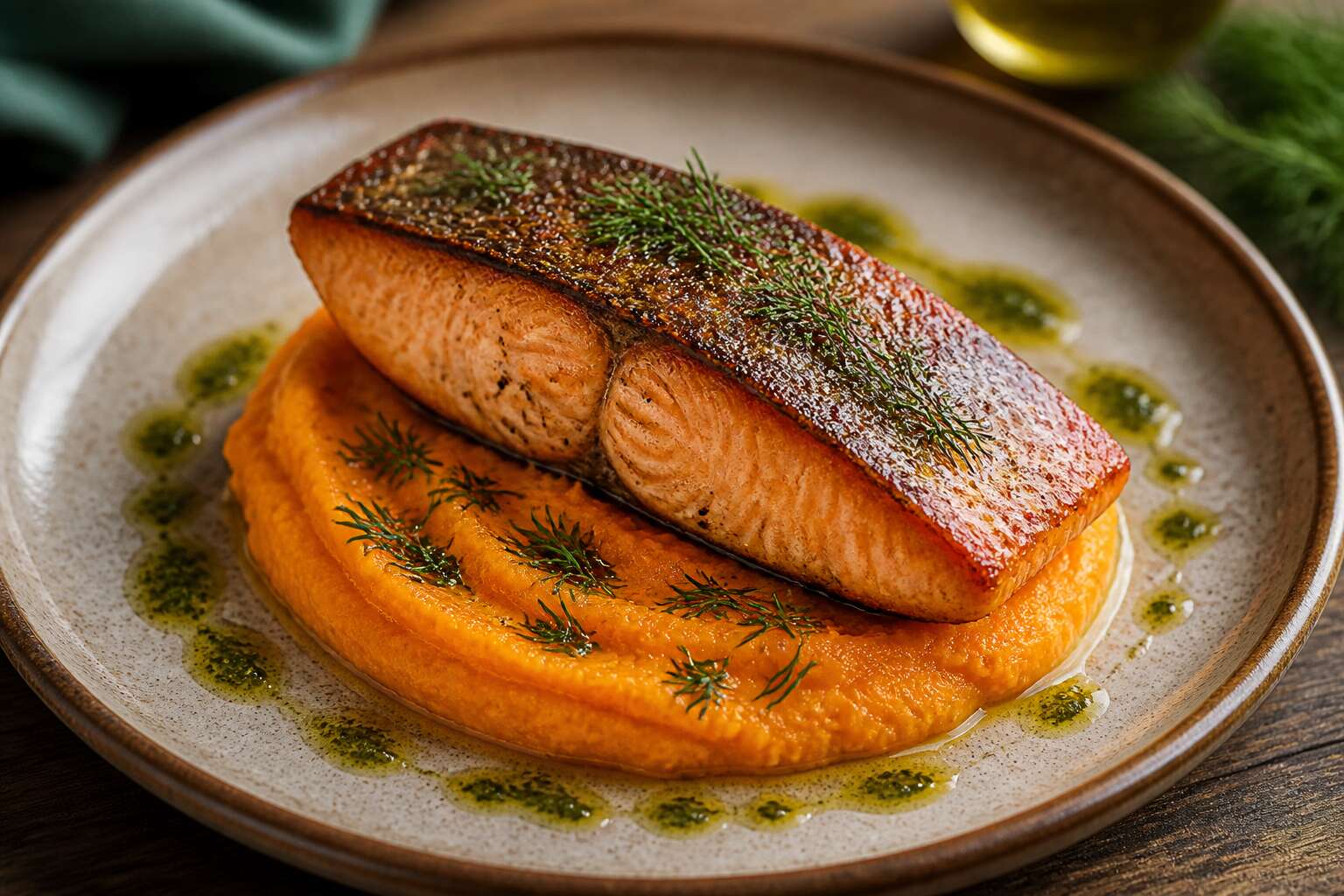
Health Benefits of Salmon and Mashed Sweet Potato
Rich in Omega-3 Fatty Acids
Salmon and mashed sweet potato create a nutrient-dense base for any meal. The omega-3 fatty acids, specifically EPA and DHA, lower inflammatory markers and improve arterial flexibility. Sweet potato adds beta-carotene and potassium, which together regulate blood pressure and support immune response. This pairing also provides steady glucose release.
Here are three measurable benefits:
- Reduced joint stiffness after exercise.
- Better cognitive recall in older adults.
- Enhanced vitamin A absorption from the fat in salmon.
I have noticed that eating this duo before a long cycling trip keeps me pedalling longer. For many South Africans, this dish is both affordable and adaptable to local tastes.
High in Antioxidants from Sweet Potatoes
A single cup of cooked sweet potato delivers over 400% of your daily vitamin A as beta-carotene. That compound acts as an antioxidant, neutralizing free radicals that damage cells. Salmon and mashed sweet potato boost carotenoid absorption because the fish’s fat increases uptake by up to six times. This protects vision and skin while lowering oxidative stress!
Purple sweet potato varieties add anthocyanins, flavonoids that support brain function. I rotate between orange and purple types for variety. Salmon and mashed sweet potato paired with ginger or chili creates a meal that fights cellular damage without costing much. For many South Africans, this dish is a practical route to a high-antioxidant diet!
Supports Muscle Recovery and Weight Management
The gym crowd rarely considers the humble sweet potato a serious ally, yet this pairing quietly outworks many pricey supplements. Salmon and mashed sweet potato provide a slow releasing carbohydrate alongside 25 grams of protein per fillet. This combination supports muscle recovery by restoring glycogen stores without spiking insulin.
The leucine in salmon triggers synthesis, while the sweet potato’s fibre keeps you full for hours. For weight management, the protein and fibre duo curbs mid afternoon cravings. I have seen clients swap their white rice for this dish and drop body fat without counting calories. Here is what makes it practical:
- One portion costs less than a protein shake.
- It requires only five minutes of prep.
- It reheats well for work lunches.
Salmon and mashed sweet potato respects your wallet and your waistline, a rare courtesy in modern food culture.
Selecting the Best Ingredients
Choosing Fresh Salmon vs. Frozen
Selecting the best ingredients for salmon and mashed sweet potato starts with the salmon itself. The choice between fresh and frozen deserves careful thought. Fresh salmon from a trusted fishmonger offers a supple texture and a clean, briny aroma. Yet frozen salmon, when blast frozen at sea, can preserve that quality for months. I often choose frozen for convenience, especially inland in South Africa! Inspect the flesh for deep orange hues and firm texture. Avoid any fillet with a milky residue or dull appearance.
Consider these markers when you shop:
- Check the harvest date on frozen packs.
- Ask if fresh salmon arrived that morning.
- Smell for a clean ocean scent, not fishiness.
Picking the Right Sweet Potatoes
The sweet potato deserves attention equal to the salmon. On a salmon and mashed sweet potato plate, the mash balances the fillet’s richness, so the root’s quality becomes crucial. Choose orange fleshed varieties like Beauregard or South Africa’s local Blesbok. They resist turning watery after boiling.
Pick up the root. Dense weight for its size means the flesh stayed moist inside. Light weight can indicate old, dried out flesh that will mash into threads. The skin should be taut, free of cracks, and smooth enough to peel with ease.
- Press the skin with a thumbnail; mature roots resist pressure.
- Check the cut ends for a deep, consistent orange tone.
- Avoid roots with soft patches or a musty scent.
A carefully chosen root changes the entire plate. The salmon and mashed sweet potato pairing works best when the sweet potato stays firm yet creamy, never dense or fibrous.
Essential Seasonings and Herbs
One lemon, a sprig of dill, and a knob of butter can change the entire character of salmon and mashed sweet potato. I buy bay leaves from a local spice merchant in Cape Town; dried supermarket leaves lose their volatile oils within months.
Season with smoked salt flakes, not fine table salt. They dissolve slowly and carry woodfire notes that complement the root’s sweetness. Ground white pepper is essential; black pepper distracts from the mash.
- Thyme, warmed in the butter rather than boiled
- Roasted garlic, squeezed whole into the sweet potato
- Lemon zest, folded in just before serving
Add the herbs in stages. This method keeps each element distinct while allowing the salmon and mashed sweet potato to meet cleanly on the fork.
Butter and Dairy Alternatives for Creaminess
Every gram of butterfat matters when the only other flavour is the fish. For salmon and mashed sweet potato, I use a cultured butter with 82% fat; its tang cuts through the sweet potato’s sugar. Low-fat spreads contain water that turns the mash gummy!
For dairy alternatives, choose a neutral almond cream or warmed coconut cream. Avoid strongly flavoured oils.
- Ghee for a nutty depth
- Mascarpone for thickness
- Whipped silken tofu for a light body
Add the fat in small pieces, stirring until glossy. Overmixing releases starch and makes paste. The mash should slide off a spoon. When the texture is right, salmon and mashed sweet potato taste balanced.
Step-by-Step Cooking Techniques
Baking vs. Pan-Searing Salmon
One glance at a seared fillet reveals everything. The golden crust, the gentle curl. Baking stays hands off, while pan-searing demands attention. For salmon and mashed sweet potato, your technique shapes the meal.
Pan-searing starts with a dry fillet. Pat it down, season it, then lay it skin side down in a hot pan. The sizzle confirms the timing. Keep the heat medium to render the fat slowly. Flip once after three minutes. Baking relies on steady oven air at 190 degrees Celsius, leaving the fish undisturbed.
- Pan-searing takes six to eight minutes total.
- Baking takes ten to twelve minutes for even thickness.
Both methods pair well with salmon and mashed sweet potato, but the results differ. Seared fillets give a crisp exterior and moist interior. Baked fillets turn out uniformly tender with less effort. Choose based on your patience and texture preference.
Boiling and Mashing Sweet Potatoes Perfectly
A sweet potato contains about 75% water, so the boiling step decides everything. Cut the orange tubers into equal pieces. Plunge them into salted boiling water, then simmer gently. The water should move them softly.
After twelve minutes, pierce a piece with a knife. It should slide out clean with a slight cling. Drain the pot, then let the chunks rest in a colander for three minutes. This prevents a gluey mash.
For salmon and mashed sweet potato, the mash needs body. Run the drained pieces through a ricer or press with a fork. Add warm butter and a splash of milk. Stir until the mixture just comes together.
Use this sequence:
- Boil until tender.
- Steam dry.
- Mash with butter and milk.
The whole process takes under thirty minutes. Your salmon and mashed sweet potato pairs a smooth potato base with the fish’s distinct texture.
Infusing Flavor with Garlic and Rosemary
I have scorched garlic more times than I care to admit. The fix is simple: heat the oil before the garlic enters the pan. For salmon and mashed sweet potato, rosemary takes the lead. Warm olive oil, drop in two sprigs, wait ten seconds, then add crushed garlic. The oil turns golden and fragrant without bitterness.
- Use whole rosemary sprigs, they release compounds slowly.
- Crush garlic rather than mincing for a milder, longer release.
- Keep the oil below a shimmer, never let it smoke.
Brush the infused oil over the fillet before searing. Reserve the rest for the mash, drizzled over the top after plating. Garlic and rosemary bind the dish together, and the sweet potato stays subtle.
Achieving the Ideal Mash Consistency
Texture determines the success of salmon and mashed sweet potato as a pairing. Overworked sweet potato releases excess starch, forming a gluey paste that clings to the palate. The ideal consistency holds a rounded shape on the spoon yet breaks apart under light pressure. Pass the boiled roots through a ricer or drum sieve while still steaming, then warm the butter and cream before folding them in. Cold fats seize and create a waxy mouthfeel.
- Press through the ricer immediately after draining.
- Fold warm butter and cream in thirds.
- Stop mixing as soon as all streaks disappear.
Residual lumps are not failures. They offer a counterpoint to the fish’s flaky texture. The finished mash should spread slowly on the plate, pooling only slightly beneath the salmon fillet. Resting for two minutes before plating lets the starch settle. This precision transforms salmon and mashed sweet potato into a deliberate final layer.
Combining and Plating the Dish
Combining the two elements demands precise timing. The rested mash holds its shape while the salmon retains a warm, flaky core. I use a hot spoon to draw the sweet potato into a soft crescent on the plate, then press the fillet gently against it. The juices from the fish seep into the mash, creating a single, cohesive bite.
For salmon and mashed sweet potato, the order of assembly keeps the texture intact. Warm the plate first, as a cold surface seizes the starch and dulls the crust. Place the mash as a low mound, then lay the salmon with its seared side facing upward. Let both settle together for a minute before serving.
- Warm the plate on a low oven rack.
- Shape the mash into a wide nest, not a peak.
- Rest the salmon fillet against one side, leaving the crust exposed.
I avoid stacking the fish directly atop the mash, which causes the base to slump. Instead, lean the fillet at an angle. A light dusting of cracked pepper finishes the plate without masking the natural sweetness of the dish.
Creative Recipe Variations
Asian-Inspired Teriyaki Salmon with Ginger Sweet Potato Mash
What makes a flavour combination endure? For teriyaki salmon with ginger sweet potato mash, the answer lies in its deliberate oppositions. The teriyaki glaze brings salt and sweetness. The mash offers natural sweetness and a soft texture. Fresh ginger adds heat and a distinct aroma. For South African cooks, this variation requires balancing these elements carefully. I have found that the ginger should be added at the end of cooking to keep its bite.
Consider these variations:
- Use low-sodium soy sauce to control the salt level
- Add a teaspoon of grated ginger to the mash after boiling
- Garnish with sliced chilli for extra heat
Each adjustment changes how the salmon and mashed sweet potato interact. The dish works only if you respect both the teriyaki and the ginger.
Mediterranean-Style Lemon-Herb Salmon and Feta Mash
When the teriyaki version leans on opposition, the Mediterranean treatment relies on assembly. Consider salmon and mashed sweet potato under a lemon-herb crust. The lemon’s acidity cuts through the oily richness of the fish. The herbs each serve a clear purpose:
- Oregano provides a slightly bitter, floral base.
- Thyme offers an earthy, almost lemony undertone.
- Parsley, added at the end, keeps the crust bright.
Feta is the audacious addition. Crumbled into the mash, it melts into pockets of sharpness that the sweet potato’s sweetness must answer. I find that folding the feta in after boiling, while the mash is still steaming, preserves its structure. You want those white speckles to remain visible!
Spicy Cajun Salmon with Chipotle Sweet Potato Mash
There is a third path for salmon and mashed sweet potato, one that replaces restraint with heat. Cajun seasoning brings a peppery, garlic-laced warmth that clings to the fish’s crisp sear. Chipotle peppers, rehydrated and blended into the mash, add a slow-building smokiness the sweet potato absorbs without losing its character.
The heat does not mask the fish. It sharpens it. A good fillet stays tender beneath the spiced crust, each crackling bite giving way to the buttery flesh inside. This is not gentleness. It is balance struck through intensity.
When building the mash, layer the heat deliberately:
- Add adobo sauce for immediate warmth.
- Fold in minced chipotle for a lingering burn.
- Finish with salt to pull the smoke forward.
The result is salmon and mashed sweet potato with conviction, a dish that demands your full attention.
Vegan and Plant-Based Alternatives
Salmon and mashed sweet potato can be reimagined for plant based diets without losing the satisfaction. Instead of fish, pan seared marinated tofu or chickpea cakes offer protein and a flaky texture. Nori and liquid smoke add the briny taste you expect. For the mash, swap butter for coconut cream and add a squeeze of orange for brightness. In South Africa, where plant based eating is growing, these swaps feel natural. Try this approach:
- Use smoked paprika and white miso in the marinade
- Fold chopped kale into the mash
The result keeps the comfort and colour of the original, while opening the plate to everyone at the table.
Serving and Pairing Suggestions
Ideal Wine and Beverage Pairings
There is a quiet pleasure in the first bite of salmon and mashed sweet potato, and the right drink elevates that moment. A lightly oaked Chardonnay from the Western Cape brings out the fish’s buttery side. Alternatively, a dry Rosé offers a playful contrast to the mash’s earthy sweetness.
For red wine enthusiasts, a Pinot Noir with soft tannins works wonders. It does not compete with the dish’s gentle flavors.
Consider these pairings:
- Chenin Blanc for a zesty lift
- Sparkling water with a twist of lime
- A crisp Sauvignon Blanc for a herbaceous edge
Serve the meal on warmed stoneware to keep the mash inviting. The visual balance of orange and pink creates an appealing presentation.
Side Dishes That Complement the Meal
Side dishes should complement the main plate. For salmon and mashed sweet potato, choose sides that offer brightness or crunch. A bitter green salad with lemon vinaigrette cuts through the mash. Charred asparagus adds a smoky edge.
Try one of these options:
- Grilled baby marrow with garlic
- Buttered green beans with toasted almonds
- Quick pickled cucumber and onion salad
Each side brings a distinct texture. The meal stays balanced when every element has a purpose.
Presentation Tips for a Restaurant-Quality Plate
Temperature dictates the first impression. Serve the salmon and mashed sweet potato on warmed plates, because cold ceramic drains heat within seconds. Spoon the mash in a broad sweep, then rest the salmon fillet against it, skin side up if crisped. This preserves the contrast between creamy and flaky.
- Wipe the plate rim clean with a damp cloth.
- Drizzle the pan sauce in a deliberate arc, not a pool.
- Finish with flaky salt and fresh herbs at the last moment.
Place the protein forward, with the mash slightly offset. I prefer this arrangement because it gives the fork a clear starting point. The result reads as intentional without feeling overworked.




0 Comments