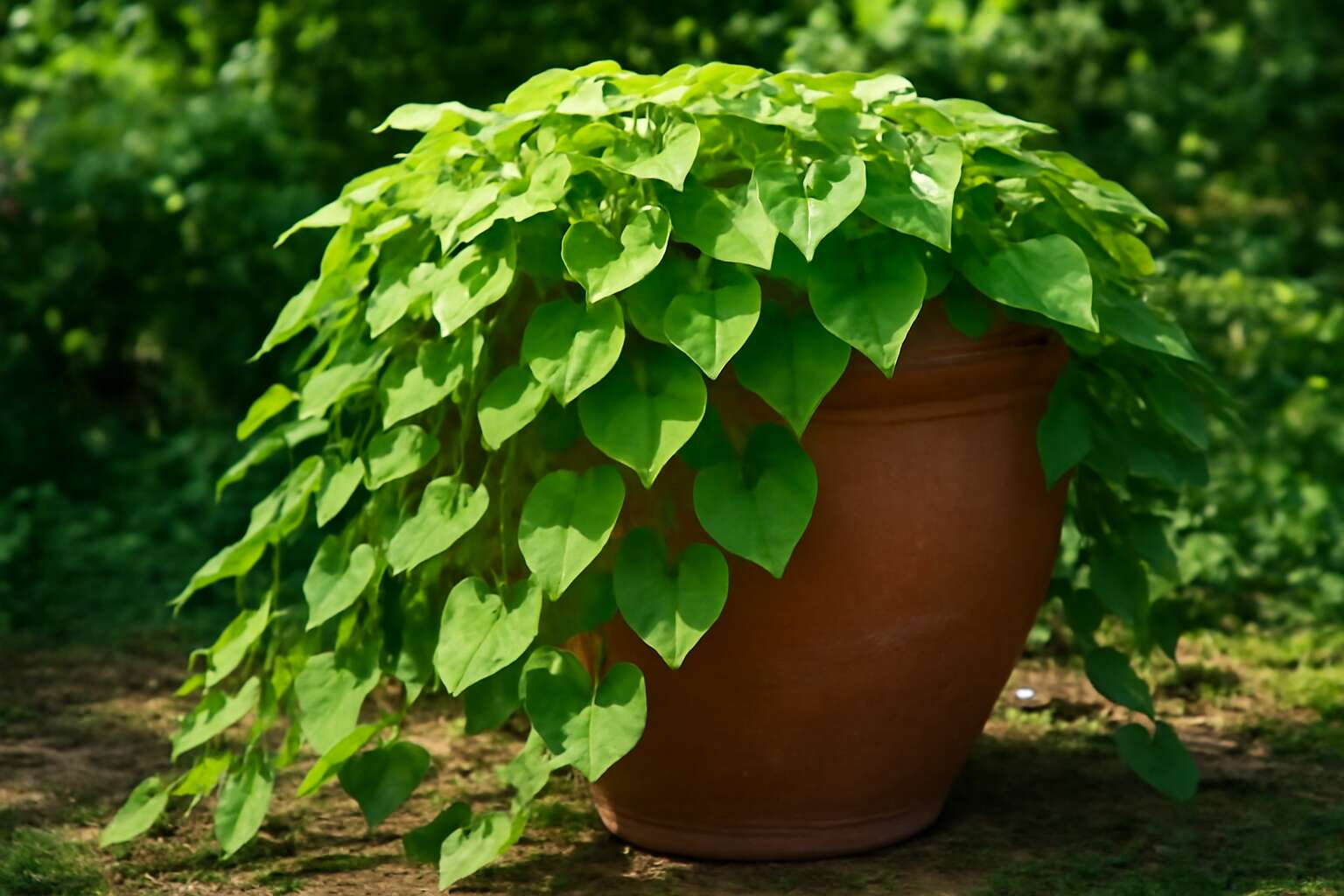
Varieties, Colors, and Growth Habits of the Vining Plant
Popular Varieties and Color Profiles
South Africa’s urban gardens lean on the sweet potato vine for instant color and a sense of motion. Its trailing ribbons and rapid growth brighten balconies, walls, and borders in weeks. Varieties vary, yet all share heat-loving resilience and low maintenance appeal!
Color profiles within the sweet potato vine range from inky-purple leaves to lime-green and bronze tones, letting gardeners tailor a look to sun and space.
- Blackie — near-black-purple foliage that pops in heat and shade
- Purple Heart — rich violet leaves with a dramatic contrast
- Margarita — lime-leaf cultivar for bright accents
- Bronze and Copper tones — warm metallics in full sun
Growth habits are forgiving: sprawling, sun-loving vines that cover trellises or spill from containers. They thrive in warm weather and offer months of color with minimal fuss once established.
Growth Habits and Vine Length
Across South Africa’s sunlit balconies, the sweet potato vine proves a color-first antidote to space constraints, turning rails and edges into ribbons of motion in mere weeks. Urban gardeners report a 40% faster color payoff when this trailing plant is allowed to drape containers and walls.
Growth habits are forgiving: it sprawls, cascades, and sweeps upward with warmth, filling corners with gentle energy. Consider its footprint in brief:
- Typical vine length: 2–3 meters of trailing growth on standard pots
- Vertical reach: several meters as it climbs or leans into structures
- Ground coverage: dense mats where sun is ample
With its languid motion and sun-loving ardor, this vine injects depth into any South African urban setting and invites the breeze to choreograph light and shadow.
Climate Suitability and Sun Requirements
Varieties of the sweet potato vine unfold a spectrum of mood and color. Blackie’s jet-purple leaves, Marguerite’s chartreuse glow, and Sweet Caroline’s soft lime offer distinct personalities for sunny South African balconies. In SA, heat-loving cultivars rise to the occasion, delivering deeper hues under bold light. Full sun fuels the richest color, while gentle shade preserves leaf integrity on scorching days!
Climate suitability and sun requirements align with urban SA spaces:
- Full sun (6+ hours daily) drives vivid color
- Warm nights and minimal frost risk, ideally above 15°C
- Well-drained soil or container mix to prevent waterlogging
- Good air circulation, especially on coastal patios
Growth habit varies by cultivar: some trail with generous drape, others cling upward, weaving along rails and walls in architectural ribbons. The sweet potato vine reveals character through motion as seasons turn.
Propagation Basics and Planting Timeline
Climbing the line between practicality and color, the sweet potato vine offers a surprisingly straightforward propagation path. A single cutting can transform a bare balcony rail into a living ribbon, with roots forming in warm SA conditions.
- Propagation relies on cuttings from healthy vines.
- Rooting occurs in a moist medium or even water, as temperatures rise.
- Bright light and warmth help the growth spurt align with seasonal rhythms.
- Root length and leaf emergence signal readiness to move beyond the cutting stage.
Timeline-wise, SA gardeners start indoors in late winter or early spring and move cuttings outdoors after frost danger passes. In warmer regions, you can begin sooner, letting the vines drape along rails or climb trellises as daylight lengthens.
Selection Guide for Garden and Container Planting
“The railing is the runway for sweet potato vine,” a South African gardener quips, and the verdict is irresistible—colorful, forgiving, and downright dramatic. These vines reward with instant drama in containers and shady corners alike.
Varieties span trailing and compact forms, with foliage colors ranging from lime green to deep burgundy and even variegated patterns. For landscapes, I like to mix textures: heart-shaped leaves, slender lobes, and bold veining create a living tapestry as the vine climbs or drapes.
Consider these broad categories when selecting for garden or container planting:
- Compact cultivars ideal for small pots and balconies
- Trailing forms perfect for rails, baskets, and edges
- Vibrant color tones—lime, bronze, purple, and variegated leaves
Garden Design and Landscaping with Ipomoea Batatas
Design Ideas for Fences and Borders
In sun-scorched South African courtyards, the sweet potato vine climbs a fence like a midnight tide, turning heat into living shade. The old maxim whispers that “shade is a garden’s velvet”—and Ipomoea batatas delivers emerald drapery that glints with dusk. This vine writes a moving tapestry along borders, a shadow that grows more poetic as day yields to night.
Fences and borders become a quiet stage where silhouette and texture converse. Ipomoea batatas offers drama without crowding the eye, a living screen that shifts with the sun.
- Low, decorative fence drape for a cascading veil.
- Slender trellis for vertical curtain motion.
- Muted textures to let emerald glow linger.
At dusk, the sweet potato vine threads lattice shadows, turning ordinary borders into a theatre of form and green scent.
Container and Patio Planting Essentials
South Africa’s sun-laced courtyards crave shade that breathes, not crowds; a recent survey shows 7 in 10 patios endure heat stress at the height of summer. Ipomoea batatas—often called the sweet potato vine—offers a graceful solution: trailing emerald foliage that brightens containers and defines a patio as a living motif. In compact spaces, it weaves soft drama, turning bare rails and pots into a curtain of light and shadow.
- Deep, generous containers that welcome the vine’s cascading habit
- A light, airy potting mix with good drainage and organic matter
- A simple support structure to guide growth along a focal axis
Placed on a sunny patio, it becomes a theatre of shade and motion, emerald shadows drifting with the breeze and turning ordinary corners into secret groves. A touch of myth walks the borders as this plant breathes green life into the design.
Color Schemes and Seasonal Interest
Seven in ten patios endure heat stress at the height of summer, and color is the first line of defense. Sweet potato vine offers moving shade and seasonal lift with trailing emerald to bronze foliage. This plant reads like a living textile, echoing South Africa’s sun-streaked landscapes and turning bare borders into a canvas!
Color schemes that maintain interest across the seasons.
- Emerald to lime for spring freshness
- Bronze, copper, and plum for midsummer warmth
- Variegated greens or purple-toned varieties for autumn depth
In South African gardens, the plant partners with architectural greens and soft borders, keeping form and color alive as the seasons shift.
Care, Maintenance, and Health for Ipomoea Batatas
Watering, Soil, and Fertilization
Across South Africa’s sun-kissed terraces, sweet potato vine can weave 2–3 meters of emerald shade in a season, a living ribbon of green! Ipomoea batatas thrives in warmth and light, turning fences and trellises into living artistry.
Care centers on watering at a calm pace. Deep soak when the top inch of soil dries, then pause; avoid splashing foliage. Mulch moderates moisture and keeps roots cool in peak summer. In my SA garden, I watch it drape a trellis with ease.
Soil should be well-draining and enriched with organic matter. A loamy mix with a pH around 6.0–6.8 loves Ipomoea batatas, and a layer of mulch preserves moisture while feeding microbial life.
Health hinges on a balanced feeding regime. Use a slow-release, balanced fertilizer early, then light top-dressings as vines thicken. Watch for aphids, whiteflies, and root issues in poorly drained beds, adjusting as needed for the sweet potato vine.
Pruning, Training, and Support Structures
Under the South African sun, pruning, training, and sturdy support structures are the quiet heroes of Ipomoea batatas. I’ve learned that the sweet potato vine rewards a deliberate touch: trimming to encourage a fuller, rambling silhouette and removing crowded limbs to maintain air flow and garden manners.
When training, aim for clean lines and gentle guidance along a trellis or fence. Consider these dynamics:
- Pruning stimulates lateral growth and a denser canopy.
- Training vines along supports provides vertical interest and reduces sprawling mess.
- Regular cleanup of dead or crossing growth preserves airflow and reduces disease risk.
Health hinges on vigilance: I keep an eye out for aphids and whiteflies under leaves, ensure foliage dries between maintenance checks, and replace brittle supports before they fail. A well-supported sweet potato vine stays vigorous, decorative, and resilient through the warm months.
Pests and Common Diseases
Care and health for the sweet potato vine hinge on vigilance under South Africa’s bright sun. Aphids and whiteflies scout the undersides of leaves, leaving curled edges, pale blotches, and the occasional sticky sheen. Good airflow, thoughtful spacing, and seasonal pruning keep the canopy breathable and resilient, a quiet ritual that rewards a healthy, rambling presence even when afternoon heat hums.
- Yellowing, curling, or stippling of leaves
- Sticky residue with visible sooty mold
- Distorted growth or stunted vines
Healthy maintenance of the jovial sweet potato vine rests on clean routines and attentive viewing. By watching for early trouble and encouraging air to move through the foliage, you prolong vigor and decorative impact as the season deepens its warmth. This mindful care sustains resilience, charm, and color for months to come.
Overwintering and Longevity
Overwintering Ipomoea batatas in South Africa is less about dramatic frost bravado and more about quiet rhythm as days shorten. Temper moisture, avoid overwatering, and let the canopy breathe—airflow is the unsung hero of long-lived vigor. In this climate, a well-timed lull in growth plus sheltered light keeps the plant robust. The sweet potato vine rewards your patience with a continued glow even when the sun spends afternoons flirting with winter!
Health and longevity hinge on steady observation rather than heroic restraint. Watch for subtle signs of stress—pale edges, curling leaves, or slower growth—and respond with gentle adjustments to light and air. A tidy, unobtrusive presence in the garden or container keeps disease at bay and invites a longer, more decorative season.
Propagation, Sustainability, and Ethical Gardening
Seed Saving and Propagation Methods
Propagation of the sweet potato vine is a quiet art, turning slips into leggy tendrils that cradle the garden’s light. In this South African climate, vegetative propagation offers reliability and quick fills of space; the season proves it again!
- Vegetative propagation through slips and cuttings
- Seed saving from mature flowers (where available)
- Ethical sourcing and biodiversity safeguards
Sustainability threads through every choice: compost returns, water-wise practices, and selecting varieties that flourish with local rainfall without depleting resources. The result is resilient beauty that ages gracefully with the season.
Ethical gardening celebrates stewardship. By saving seeds from healthy, disease-free plants and sharing surplus with neighbours, we cultivate community and minimize waste. Seed diversity ensures the future of this plant remains vibrant and capable of coping with climate shifts.
Sustainable Watering and Soil Health
The sweet potato vine is a quiet revolution in the South African garden. “Water is the soil’s best friend,” a gardener once said, and this vine proves the truth. In a climate where water is precious, vegetative propagation through slips and cuttings offers reliable growth, turning a simple slip into a living tapestry that reminds us to respect limits and to grow with intention.
Sustainability hinges on soil health and water stewardship. The following pillars keep this vine resilient year after year:
- Soil health through organic matter and compost
- Water stewardship via rainwater capture and mulching
- Smart variety choices matched to local rainfall patterns
Ethical gardening invites stewardship. Sharing surplus with neighbours strengthens community, and biodiversity safeguards help this resilient plant adapt to climate shifts across South Africa.
Biodiversity and Native Garden Partnerships
“Water is the soil’s best friend,” a gardener once said—and this vine proves the truth in living color. The sweet potato vine is a quiet rebellion against waste, teaching patience as it climbs across South African light.
Ethical gardening invites stewardship; we honour land that feeds us by sharing surplus with neighbours and by placing biodiversity at the heart of every patch.
- Share surplus with neighbours and community gardens
- Plant native species to support pollinators
- Partner with local nurseries and schools to nurture biodiversity
Biodiversity thrives when gardens become native garden partnerships—workshops, exchanges, and cooperative plots that bind urban life to the South African landscape while fortifying resilience against climate shifts.
Waste Reduction and Reuse in Vining Projects
Propagating beauty under the South African sun, propagation thrives on simple methods like layering and tip cuttings; the sweet potato vine roots readily in damp compost or water, turning a single runner into a living curtain. Each cutting carries a promise of green resilience, a quiet rebellion against waste that grows with the light.
Sustainability in vining projects rests on rainwater harvesting, mulching, and the mindful reuse of pots and soil. The sweet potato vine rewards such stewardship with long, forgiving trails that weave through fences, collapsing the line between garden and ecosystem and inviting neighbors to witness transformation rather than debris.
Waste reduction and reuse become daily rituals when the vines lead the way. Consider these small acts:
- Relocate sturdy cuttings into fresh beds rather than discarding them
- Repurpose old pots, bags, and trellis scraps into modular supports
- Compost prunings to feed the next generation of growth
Ethical Sourcing and Varietal Selection
Propagating beauty requires more than technique; it asks for conscience. I watch the sweet potato vine thread sunlight into green, and in South Africa’s diverse climate it travels with the season, carrying a quiet pledge: stewardship over spectacle. I select varieties with robust vigor, and let my planting be a chorus of sustainable choices.
Ethical sourcing and varietal selection guide the way, turning fences into living archives and inviting neighbors to witness transformation rather than debris.
- Provenance and transparency of cultivation practices
- Varietal resilience suited to South Africa’s seasonal rhythms
- Commitment to biodiversity and minimal ecological footprint
Let this living ribbon weave resilience through spaces and communities, and watch how care circles back to you!




0 Comments